Underpayment, harsh working conditions, and violations of human and labor rights are the grim reality of the Croatian textile industry. This report presents the findings from the research on working conditions and the subsequent round table discussion regarding the introduction of legal mechanisms to oblige large fashion companies—the primary culprits for low production prices to pay an amount sufficient to ensure a living wage.
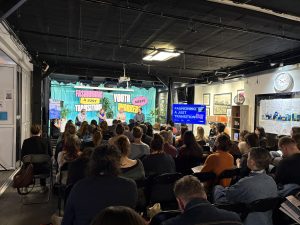
On Tuesday, June 30, at the Hall of the Union of Croatian Trade Unions, the results of the research on the Croatian textile industry were presented. The study was conducted according to the unique methodology of the global network Clean Clothes Campaign (CCC).
The research covers the conditions under which female workers operate, the gap between actual wages (mostly the minimum wage) and a living wage, the state of human rights, and the challenges of trade union organizing. The results were discussed by researcher Ana Vragolović and the General Secretary of Novi sindikat, Tomislav Kiš.
Vragolović provided baseline data on today’s garment industry: it employs just over 11,000 workers across 832 production companies. The sector primarily relies on “finishing jobs” for foreign clients mostly Italian and German fashion brands like Benetton, Hugo Boss, and Olymp which pay low prices, directly affecting workers’ salaries.
Most women in the sector work for the minimum wage, receiving an average of about 3,000 HRK (approx. €405–€418). However, the calculated living wage they should receive is three times higher: €1,246. This disparity forces workers to make ends meet through precarious “black market” labor or side jobs like private repairs. Interviewed workers reported being unable to afford a simple movie ticket or a restaurant meal, and many had not traveled outside their homes for years clear indicators of systemic poverty.
Despite Article 55 of the Constitution of the Republic of Croatia, which guarantees every worker “the right to a salary ensuring a free and dignified life,” rights are frequently violated. Workers are often forced to work Saturdays or stay late on weekdays to meet quotas. This overtime is frequently unrecorded and unpaid; when it is paid, it is often disguised as a “reward” to avoid taxes and legal regulations.
Benefits such as transportation allowances, night shift pay, meal allowances, and seniority bonuses are generally non-existent in the surveyed companies. Travel expenses are often paid via vouchers valid only in factory shops. Taking sick leave or annual leave is discouraged; in one instance, an employer threatened to withhold holiday bonuses if a worker took more than 15 days of sick leave.
“Working on Saturdays is miserable. We get travel vouchers we can’t use because they are only for shirts we don’t wear. I travel 15 kilometers each way; I pay for fuel and food out of my meager salary. We don’t know what Christmas or Easter are. I don’t even know where to start listing the expenses we can’t cover,” Vragolović quoted one worker.
Furthermore, hygienic conditions are substandard, with inadequate toilet facilities and a lack of supplies. Long hours and poor occupational safety lead to chronic health issues, including back pain, varicose veins, and respiratory problems due to constant dust exposure.
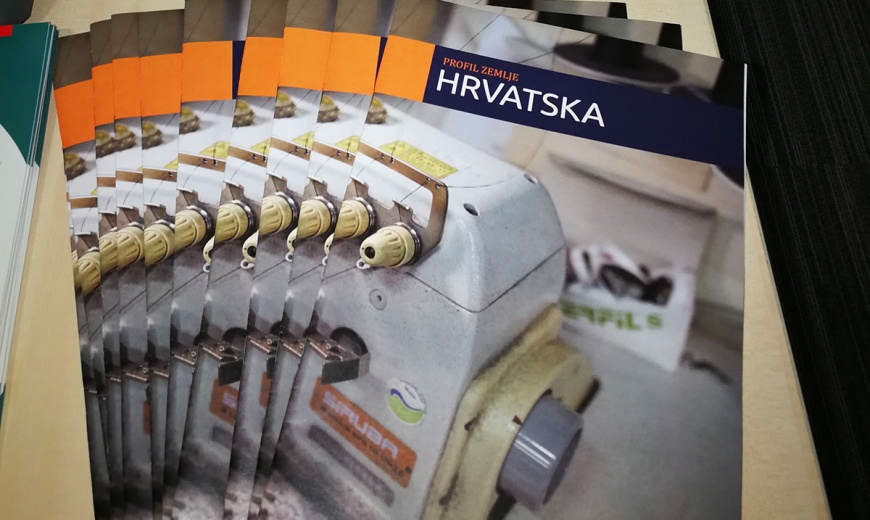
General Secretary of Novi sindikat, Tomislav Kiš, commented on the research results, first explaining the work of the international organization Clean Clothes Campaign. “The name ‘Clean Clothes’ implies that clothing manufactured in textile factories must be produced in a clean manner. Our focus is to ensure that workers in the production chain receive what they deserve. It is one of the fundamental human rights to live with dignity from one’s labor. Workers in Croatia and beyond do not live with dignity. The research conducted by the Croatian Center for Labour Solidarity resulted in a booklet that documents the lives of workers.
The data within it is information that every trade unionist involved in textiles already knows. It is not surprising, but its exceptional benefit lies in the fact that everything has been put in one place with extreme precision. This is material that can be used to enter an evidence-based discussion. We can use it precisely for that in discussions about, for example, the living wage. A living wage is not a union basket or something pulled out of thin air; rather, there is a methodology for calculation developed over the years by the Clean Clothes Campaign, which encompasses all necessary living expenses that workers currently cannot cover food, rent, utilities, normal heating in winter, clothing and footwear, health and hygiene costs, and some savings for emergencies. As a union, we want to fight so that no worker is without a living wage.”
Kiš stated that factory directors in our region mostly have empty coffers because, in a ruthless competitive struggle, they do not compete over who is better or higher quality, but who is cheaper. “Once you start with that, there is no telling where the bottom is. Croatians work cheaper than Germans, Macedonians cheaper than us, and the ones who profit are mainly the owners of fashion brands Hugo Boss, Zara, and others. The less a worker is paid, the higher their profit. We have reached a calculation that a worker in Croatia and neighboring countries could live with dignity if brands paid only 50-60 cents more per product.”
He also emphasized the purpose of the research: “to have a basis for discussion and argumentation and, in cooperation with colleagues, to ensure that the living wage becomes the base wage in Europe.”
The moderator of the presentation, Danica Juričić Spasović, pointed out the importance of highlighting the legally binding accountability of fashion companies specifically, using the law to mandate that fashion companies take responsibility for working conditions and workers’ wages throughout their production chains, and noting how small the investments needed are to ensure workers do not work in humiliating conditions and to improve the overall situation.
In conclusion, Kiš said that Novi sindikat will advocate for the legalization of the living wage within the EU, so that the living wage everywhere becomes what the legal minimum wage is now, but in a significantly higher amount. “Our goal is also to change the laws in Croatia so that the living wage can be implemented. There will likely be objections that this is not possible right now, but we believe it can and must be done. This is the foundation for union work and it facilitates collective bargaining. We want to cross borders; capital does not recognize them, however, trade unionism is forced to recognize them due to legal regulations. Because of this, we want to create a situation where collective agreements can be signed with brands, and we are seeking the establishment of a legal mechanism that would enable this. Thanks to the conducted research, we also have a figure around which we can position ourselves – 1,246 euros for a living wage. We have a starting point for negotiations.”
Following the presentation of the research results, a round table was held on the topic of corporate responsibility. The participants were Agnes Jongerius, a Dutch Member of the European Parliament; Tatjana Vlasić, advisor to the Ombudswoman of the Republic of Croatia for the promotion of human rights; Stefan Aleksić, a human rights activist from the Center for Emancipatory Politics, Serbia; Marija Todorovska, a human rights activist from the association La Strada, Macedonia; and Mario Iveković, president of Novi sindikat.
At the beginning, corporate responsibility was explained it refers to the responsibility of companies and fashion brands toward respecting the labor and human rights of those employed in their supply chains, regardless of whether it concerns companies that employ directly (classic employer) or a buyer of a specific product (e.g., a brand) that indirectly has a significant influence on wage policy and working conditions.
Production in many sectors today has an international character (e.g., textiles, food, electronics, the automotive industry), so old methods of regulating labor relations and monitoring the respect of workers’ rights can no longer satisfy the needs and protection of fundamental human and labor rights, making it necessary to establish new mechanisms. The discussion also included proposing solutions for the possibility of passing a uniform law at the European Union level that would oblige companies to respect human and labor rights (Mandatory Human Rights Due Diligence Law) and, accordingly, ensure a living wage.
You can watch the presentation of the research results and the round table discussion on: Novi sindikat Youtube channel.