
Novi sindikat projects
Novi sindikat has so far participated in a number of international and domestic projects. Projects allow us to organize activities for which we would not have sufficient funds from the membership fee, such as campaigns at the international level and educational activities such as round tables, conferences, workshops and educations.
INTERNATIONAL PROJECTS
Designing a just transition
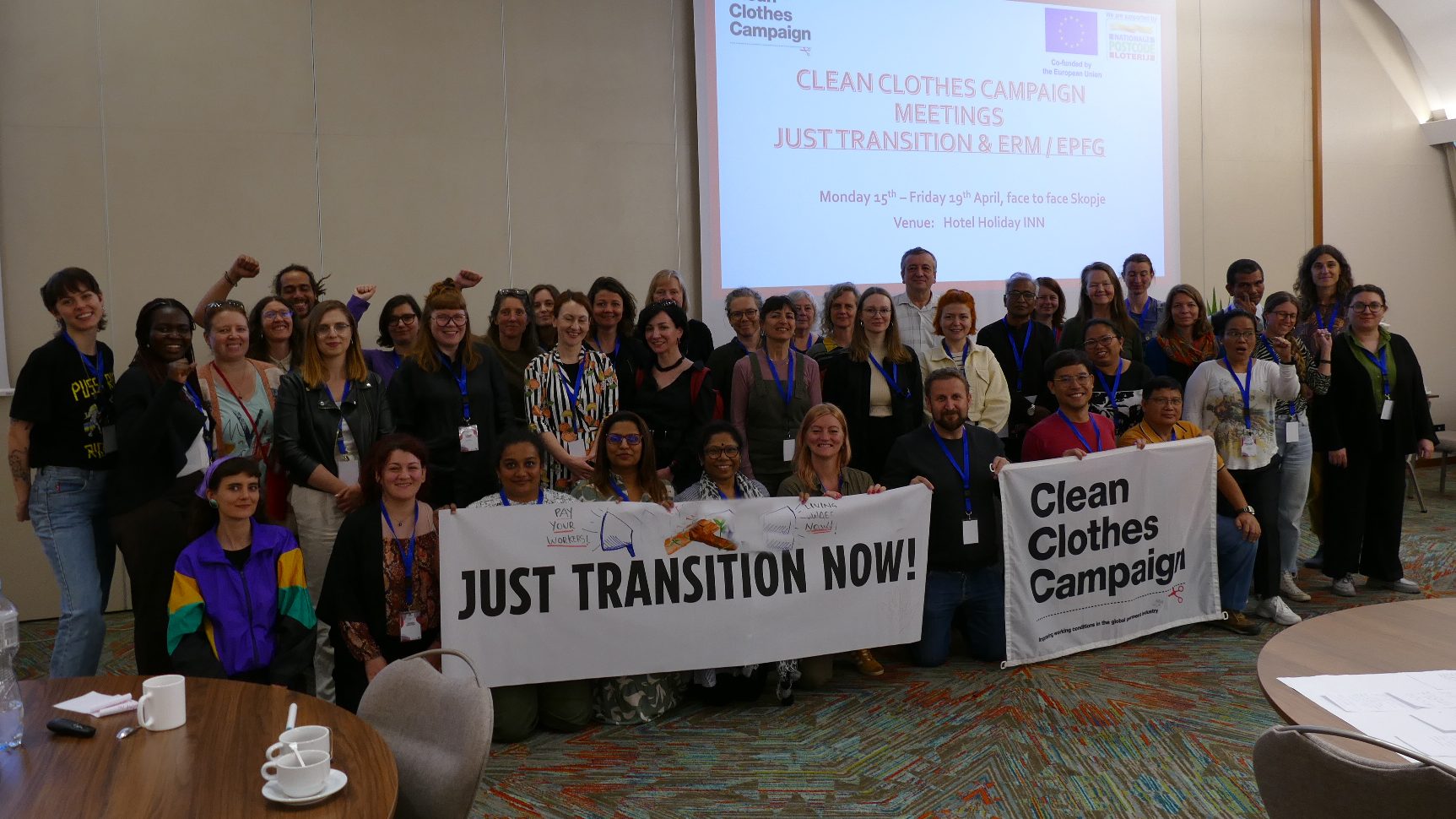
The project manager is the International Office of the Clean Clothes Campaign, which is headquartered in Amsterdam. The consortium consists of nine partners from eight EU states and three partners from accession states.
Through the project, we are engaged in research on the impact of climate change and industrial transition on workers in the textile industry, then involving young people and workers in the creation of EU policies on this topic and drafting The Just Transition manifesto, by promoting dignified pay and building coalitions to advocate for a just transition.
In order for the voice of young people to be heard enough, the Clean Clothes Campaign established the Youth Advisory Board (YAB), and we included our member and worker of Podravka, Antonija Vargantolić, in the work of Yab.
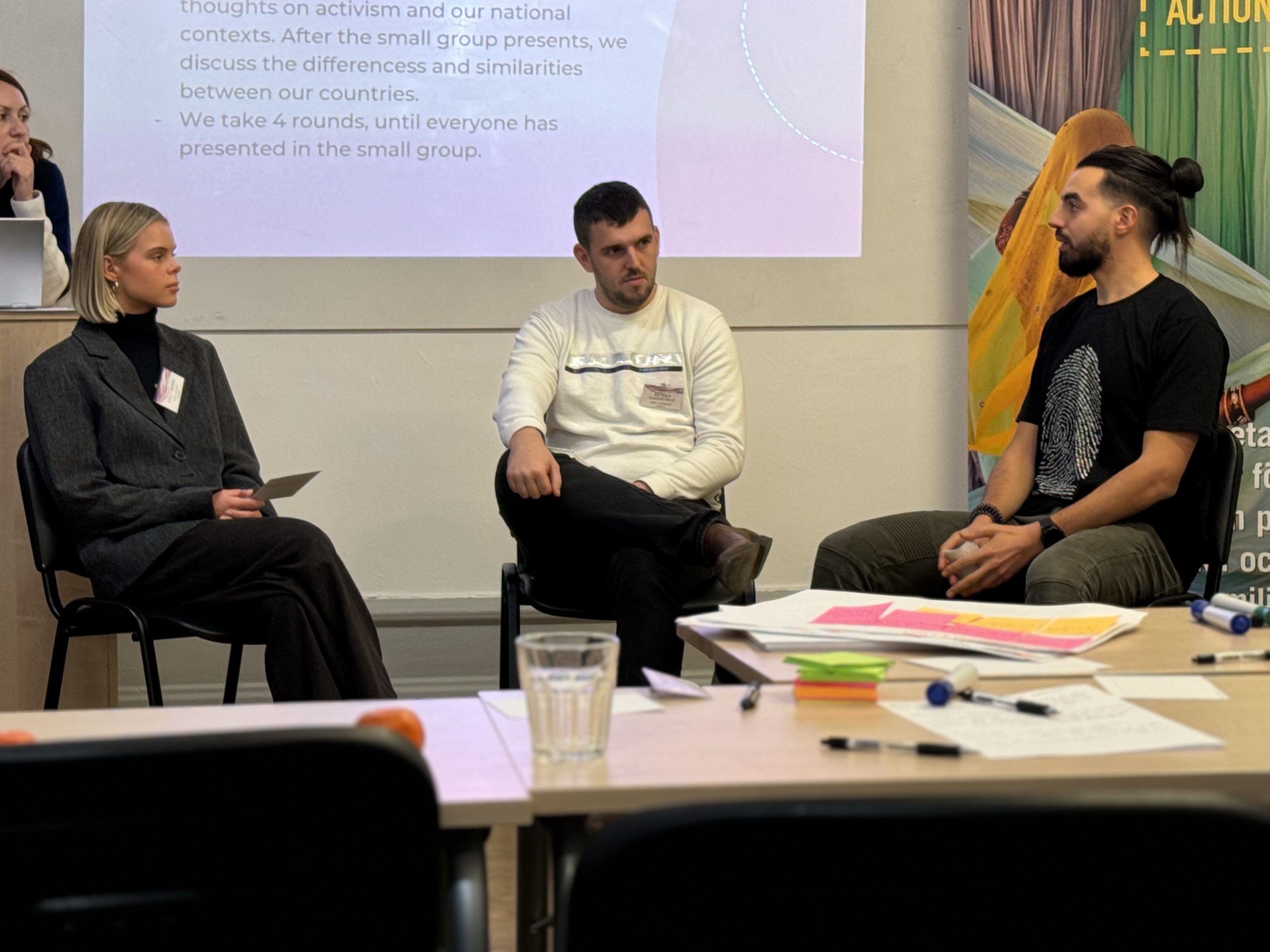
Read more about YAB here.
Also, Novi sindikat will carry out a series of educations of our members about the just transition, as well as education in Bosnia and Herzegovina.
Some training already took place: in November 2024. we organized workshop in Otočac it was attended by twenty trustees and members from eleven companies, and in May 2025. the first part of the Trade Union School in Trogir.

We will also conduct research on working conditions in the Croatian textile industry and five other manufacturing countries in Eastern Europe.
The project started in December 2023, and runs until December 2027. It is financed by the European Union, with 10 percent co-financing from our side.
Filling the Gap: Achieving Living Wages through improved transparency
The project was led by the International Office of Clean Clothes Campaign based in Amsterdam, and Novi sindikat participated as a partner, along with organizations from eight other countries of the European Union, as well as from Indonesia and Hong Kong.
We were engaged in promoting the necessity of transparency among fashion brands regarding working conditions in their supply chains and the promotion of a living wage as a basic human right.
We participated in the development of the digital tools Fashion Checker, which records brand transparency data.
Research was also conducted on working conditions in the textile industry, and a brochure titled Country profile: Croatia was issued.
In addition, we organized training for members and the project’s final conference in Zagreb, titled: Living Wage is possible-a decent wage is possible with gathered 120 participants from around 20 countries in Europe, Asia, Africa and the USA.
The project ran from 2019. until 2022. and was 80 percent financed by the European Union, with 20 percent co-financing from our side and our partners.
Pay your Workers – Respect Labour Rights
Novi sindikat was the lead partner of this project, and our partners were the Regional Industrial Union from Varaždin and three non-governmental organizations from BiH: Zora (Zenica), Helsinki Citizens’ Assembly (Banja Luka), and the Foundation for Local Economic Development (FLER).
Through the project, we worked on strengthening the global campaign “Pay Your Workers,” led by the international organization Clean Clothes Campaign. The aim of this campaign was to conclude binding agreements with brands to protect the right to organize and to ensure the payment of numerous outstanding rights to workers in the textile industry (a consequence of the COVID crisis).
Alongside several educational activities and a series of social media posts, it is important to emphasize that through this project, we provided support to Orljava workers in exercising their right to unpaid salaries and severance pay.
In addition to exerting pressure at the local level through letters to the government and rallies in the center of Požega, we organized a global campaign against the German brand Olymp, which was primarily responsible for the irresponsible closure of the factory in Požega.
Ultimately, together with the workers, we successfully won the severance pay; however, without the financial and logistical support secured through the Clean Clothes Campaign, we would not have succeeded.
Furthermore, we are continuing the campaign against Olymp through a complaint to the Organization for Economic Co-operation and Development (OECD), as they have yet to acknowledge responsibility for the factory, for which they were the majority customer for more than 50 years before abruptly ending cooperation.
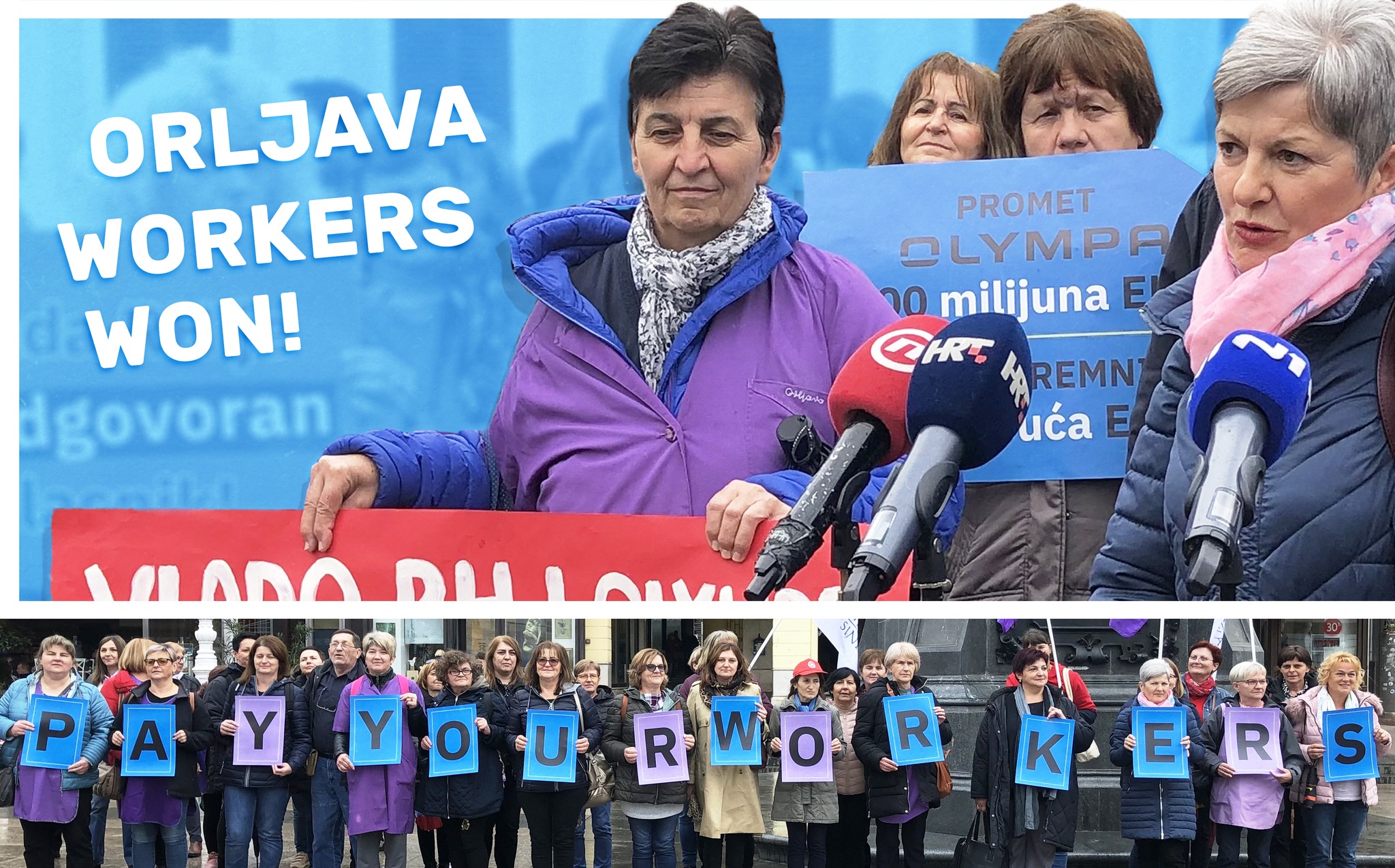
Read more about the struggle of the Orljava workers here.
The project ran from 2020 until 2023 and was funded by the Open Society Institute through the Clean Clothes Campaign.
Croatian national campaign for a strong EU corporate accountability law
Within the framework of this project, funded by the organization Fair Trade from Belgium, we produced several educational videos for the campaign advocating for strong EU legislation and the corporate responsibility directive.
We also have workshop with interested young people in Šibenik on the topic of lobbying the Croatian government and our MEPs with the aim of advocating the EU directive.
Future-Proof Collective Bargaining: Protecting worker rights in AI-driven world of work
This project was financially supported by the Network of European Foundations (NEF) from Belgium. We created a list of European trade unions that organize platform workers and worked on networking with several organizations dealing with the same issue (from Slovenia, Serbia and Georgia).
We organized training on the use of platform workers’ personal data and how that data can be utilized to protect labor rights.
Additionally, we analyzed the European Directive on Platform Work and participated in the campaign conducted by European unions aimed at achieving a better definition of platform work and enabling collective bargaining.
You can read more about the connection between artificial intelligence and trade union work here.
The project ran from September 2023 to September 2024.
Economic and gender justice in the global apparel supply chain
The implementation of activities within this project was funded by the NoVo Foundation through the Clean Clothes Campaign (CCC). Novi sindikat was the lead partner, and our partners included four CCC organizations from Albania, Bosnia and Herzegovina, Romania, and Italy.
The goal of the project was to empower the role of women in trade unions, strengthen national and regional CCC coalitions, and support the global campaigns Pay Your Workers and Protect Progress.
The role of Novi sindikat involved coordinating and monitoring activities in partner countries, strengthening the CCC coalitions for Croatia and Bosnia and Herzegovina, and participating in the organization of meetings for the part of the European CCC Coalition that focuses on the working conditions of textile workers in European countries (both EU and non-EU members).
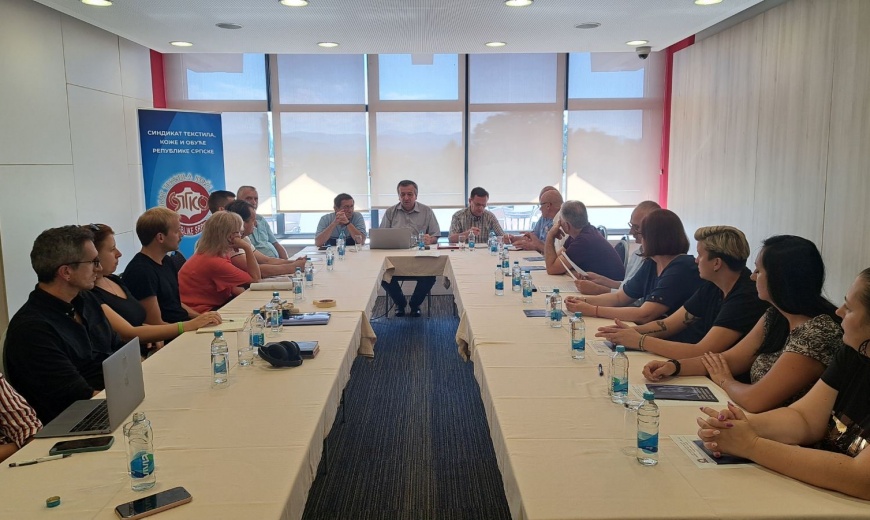
Read the report from one of the meetings of the HR-BiH CCC coalition in the publication: Cooperation between associations and trade unions to better conditions in the textile industry.
The activities were coordinated with another project from the same call, which the CCC organization from the Czech Republic coordinated for the Czech Republic, Poland and North Macedonia.
The project ran from December 2022 to May 2024.
HOME PROJECTS
Education and Networking toward Collective Agreements (SUDOKU)
Through the SUDOKU project, we will strengthen the capacities of our partners—the Regional Industrial Union (RIS) and the Independent Union of Workers of Croatia (NSRH)—to operate within the labor market through training, networking, and the development of services intended for their members.
We will provide education for our employees, partner staff, union commissioners, and members regarding trade union activities in current conditions, while simultaneously gathering feedback on the needs of workers within their respective companies. In this way, we will strengthen both our and our partners’ capacities for collective bargaining and the improvement of legislation.
The creation of a digital membership database, coordinated by the NSRH, will facilitate easier communication and engagement with the membership. Furthermore, we will participate in training sessions organized by global trade union federations and engage in study trips.
Beyond direct cooperation, we will work on networking by organizing conferences, roundtables, and similar events on relevant topics, and we will disseminate knowledge and experience through the production of educational videos.
Satisfied Worker – Successful Employer (ZaRUP)
Partners in the ZaRUP project werethe Aircraft Cabin Crew Union (SKOZ) and the Croatian Mediation Association (HUM).
Through the project, we conducted an analysis of working conditions in Croatia, with a special emphasis on seasonal workers. We organized a study trip of a large number of our members and employees to visit an employer with successfully developed social dialogue — specifically, the public institution Plitvice Lakes National Park.
We also organized a study trip to Austria where we met with the non-governmental organization Südwind and the union organizing seasonal workers Pro.ge.
The project also included two social dialogue training sessions, two training sessions for conciliators conducted by HUM, and four thematic roundtables focusing on mutual trust between employers and workers, burnout, and healthy workplaces. Additionally, it encompassed Facebook campaigns and a final conference.
The ZaRUP project ran from 2020 until 2022. It was financed by the European Social Fund (85 percent) and the state budget of the Republic of Croatia (15 percent).
Social Dialogue and Modern Industrial Relations – Yesterday, Today, Tomorrow – Opportunities and Perspectives (MIP 2030)
Our partners in the MIP 2030 project were the Aircraft Cabin Crew Union (SKOZ), the City of Zagreb, the Croatian Mediation Association (HUM), the Croatian Association of Trade Unions (HURS), and the Zagreb Innovation Centre (ZIC).
The project focused on social dialogue. A total of 92 participants completed three different training modules covering the framework for social dialogue, bipartite and tripartite negotiations, and peaceful conflict resolution.
Additionally, 61 participants attended a seminar on mechanisms for achieving successful social dialogue, the development of communication skills, and collective bargaining techniques.
Project activities also included study trips, research on the perspectives of social dialogue with a comparative analysis across the EU, and four thematic roundtables.
The MIP 2030 project ran from 2018 to 2020. It was 90 percent financed by the EU, with 10 percent co-financing provided by the project partners.


