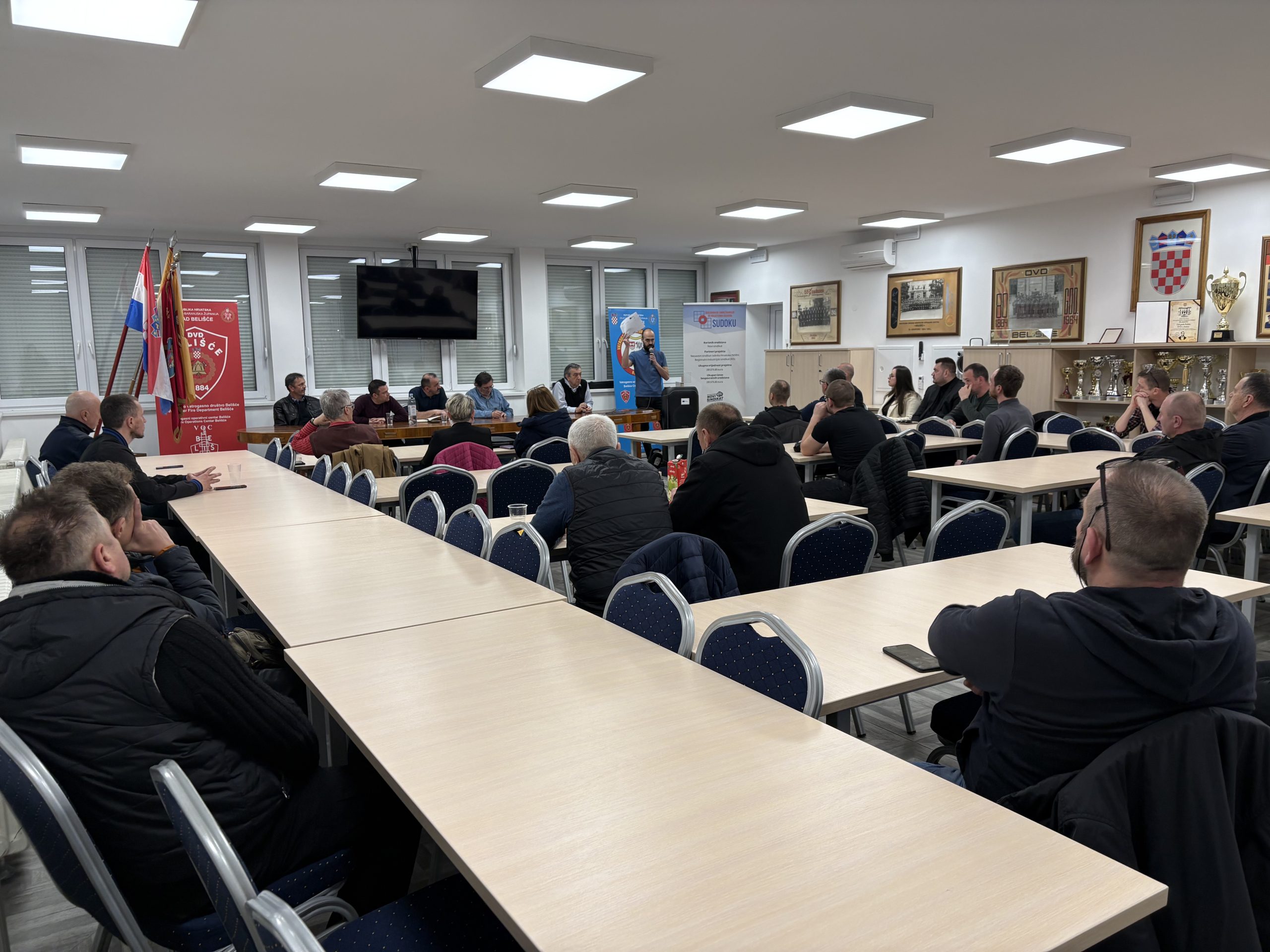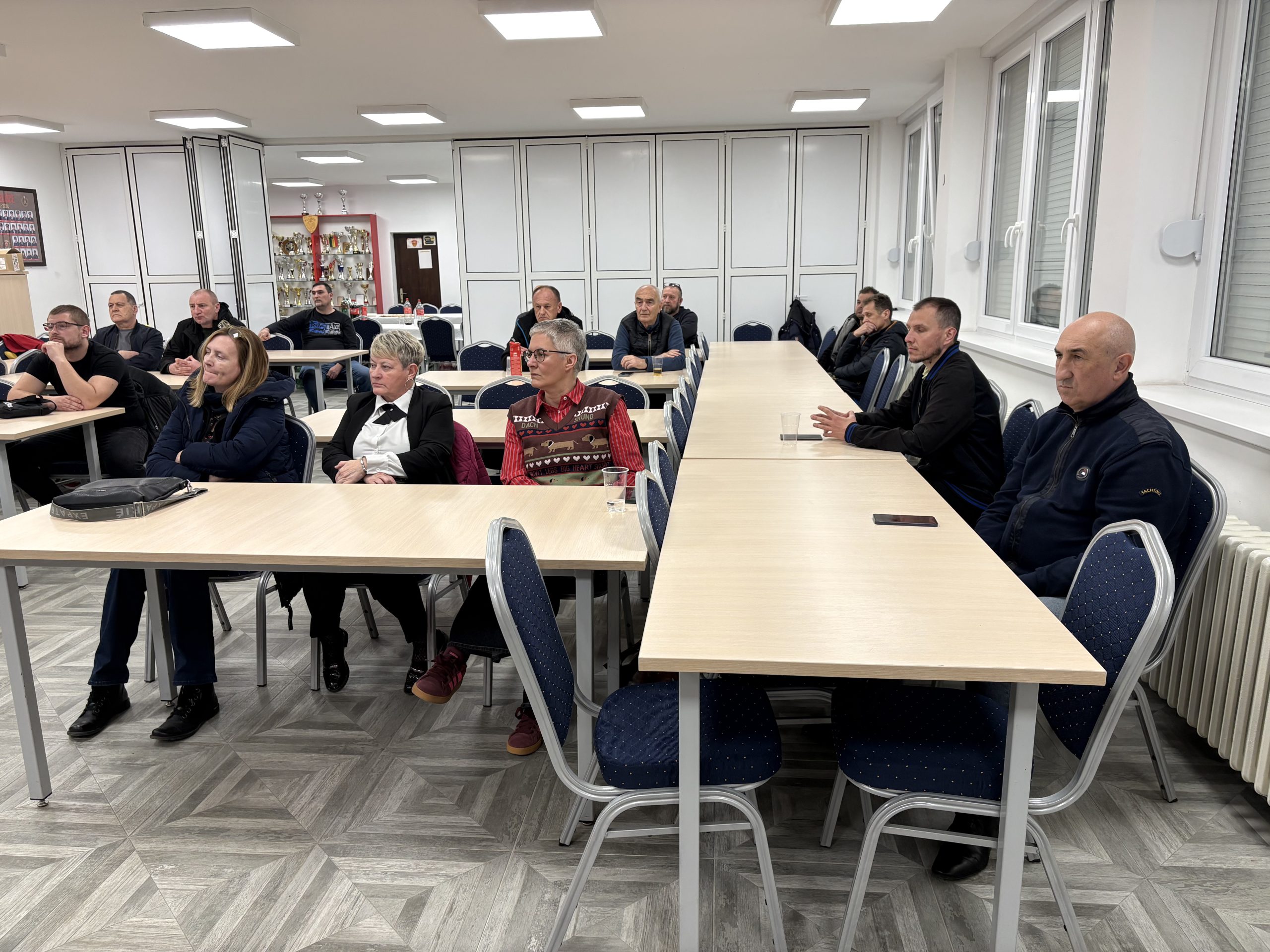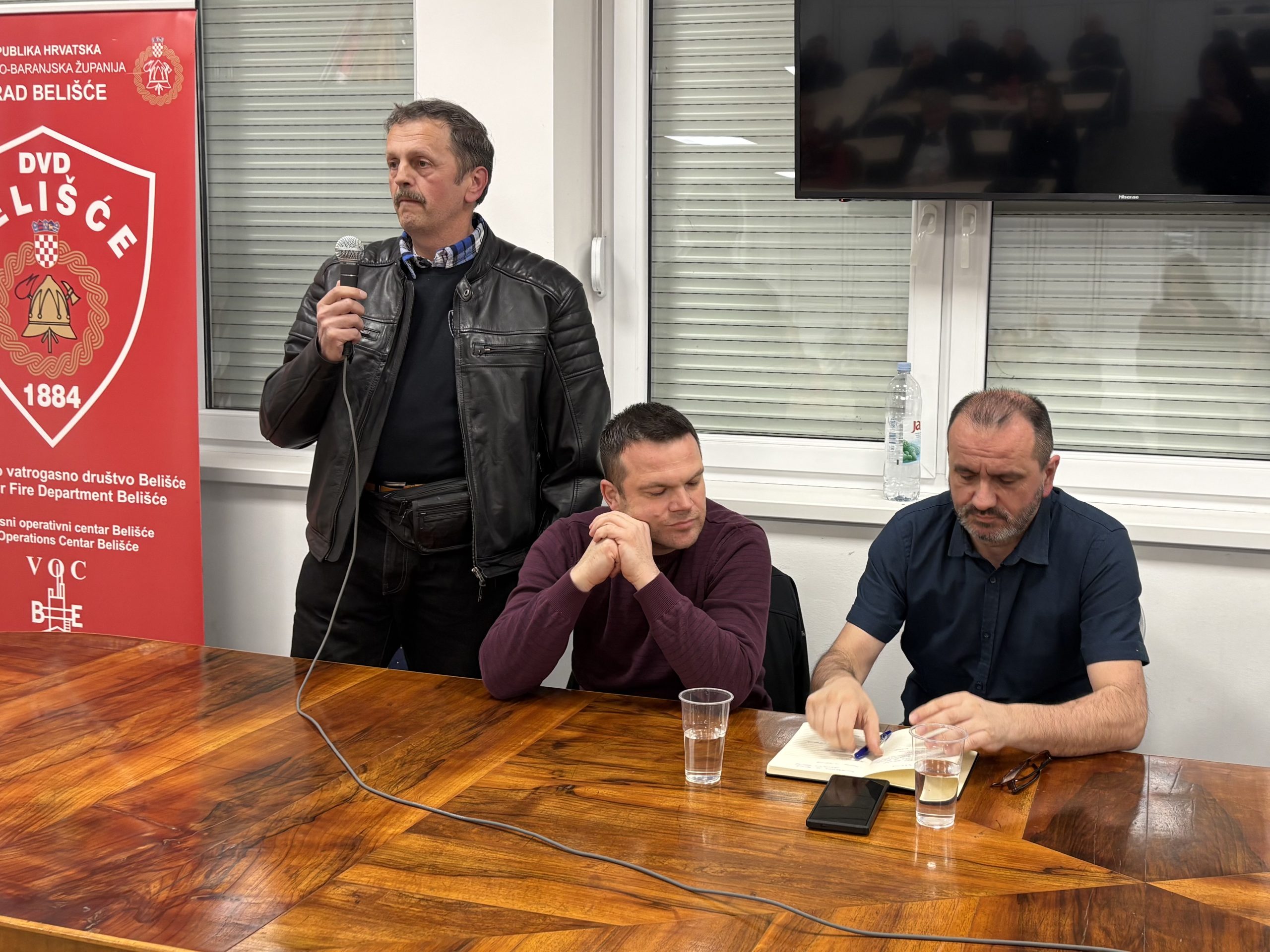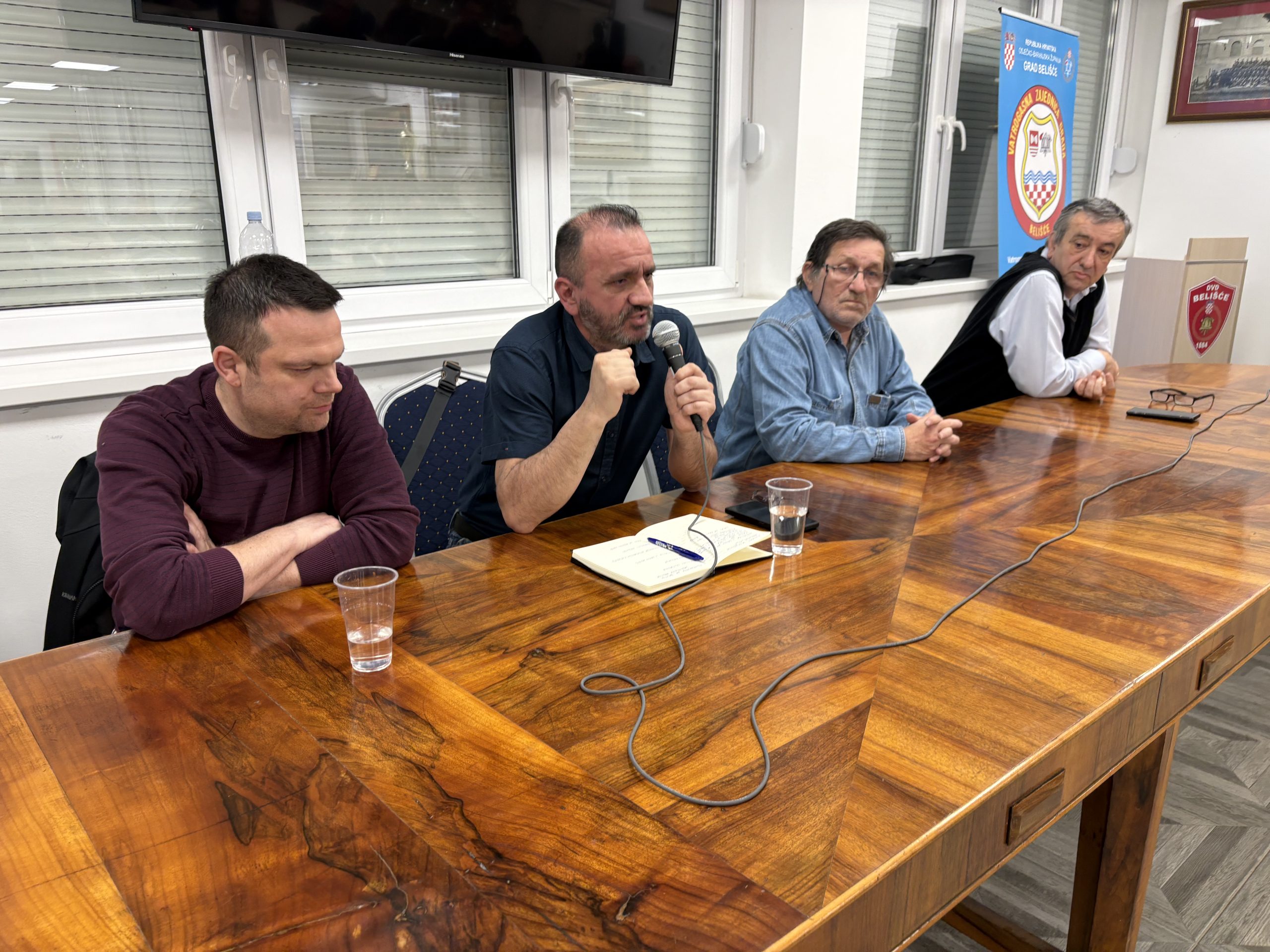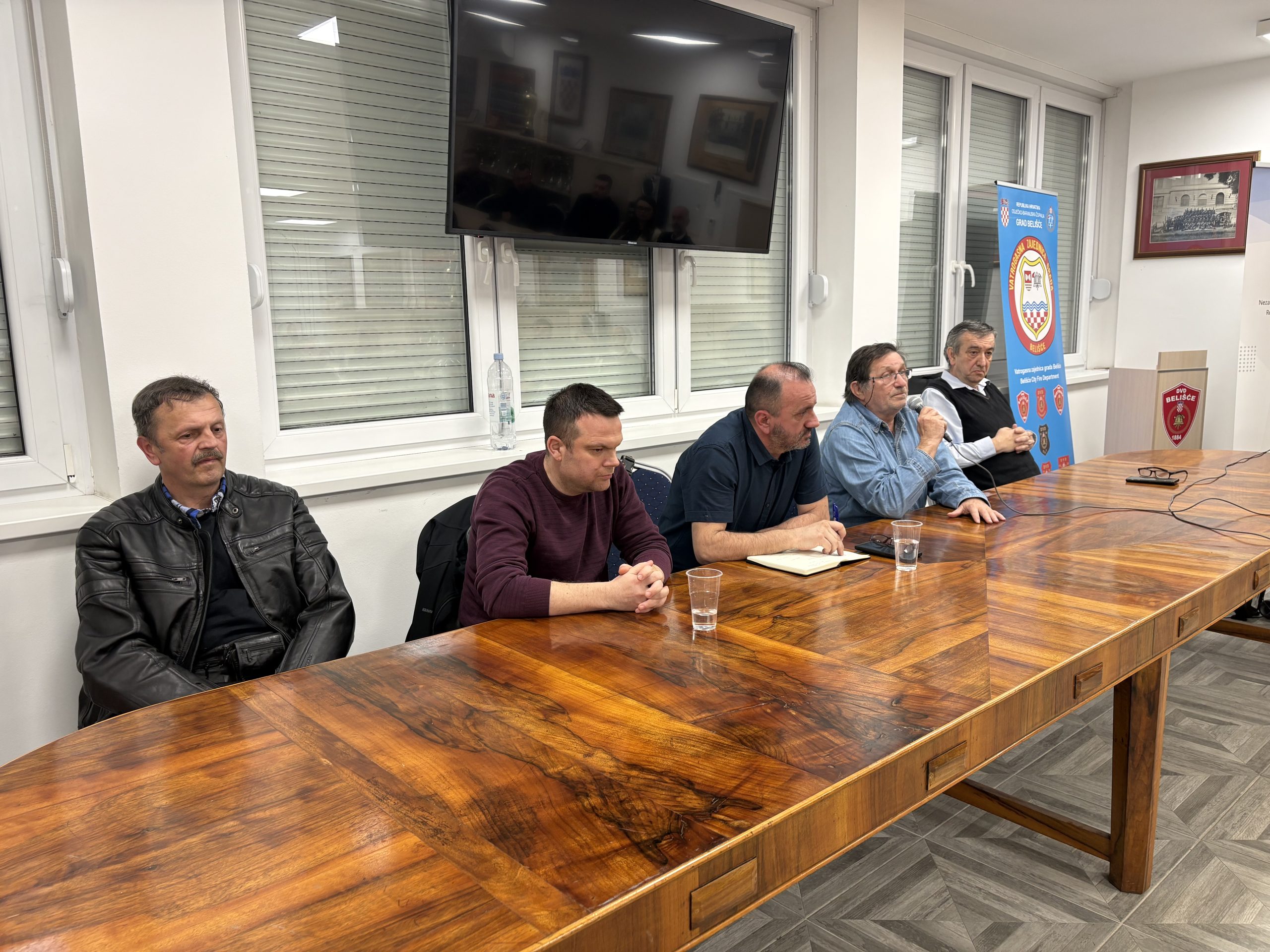
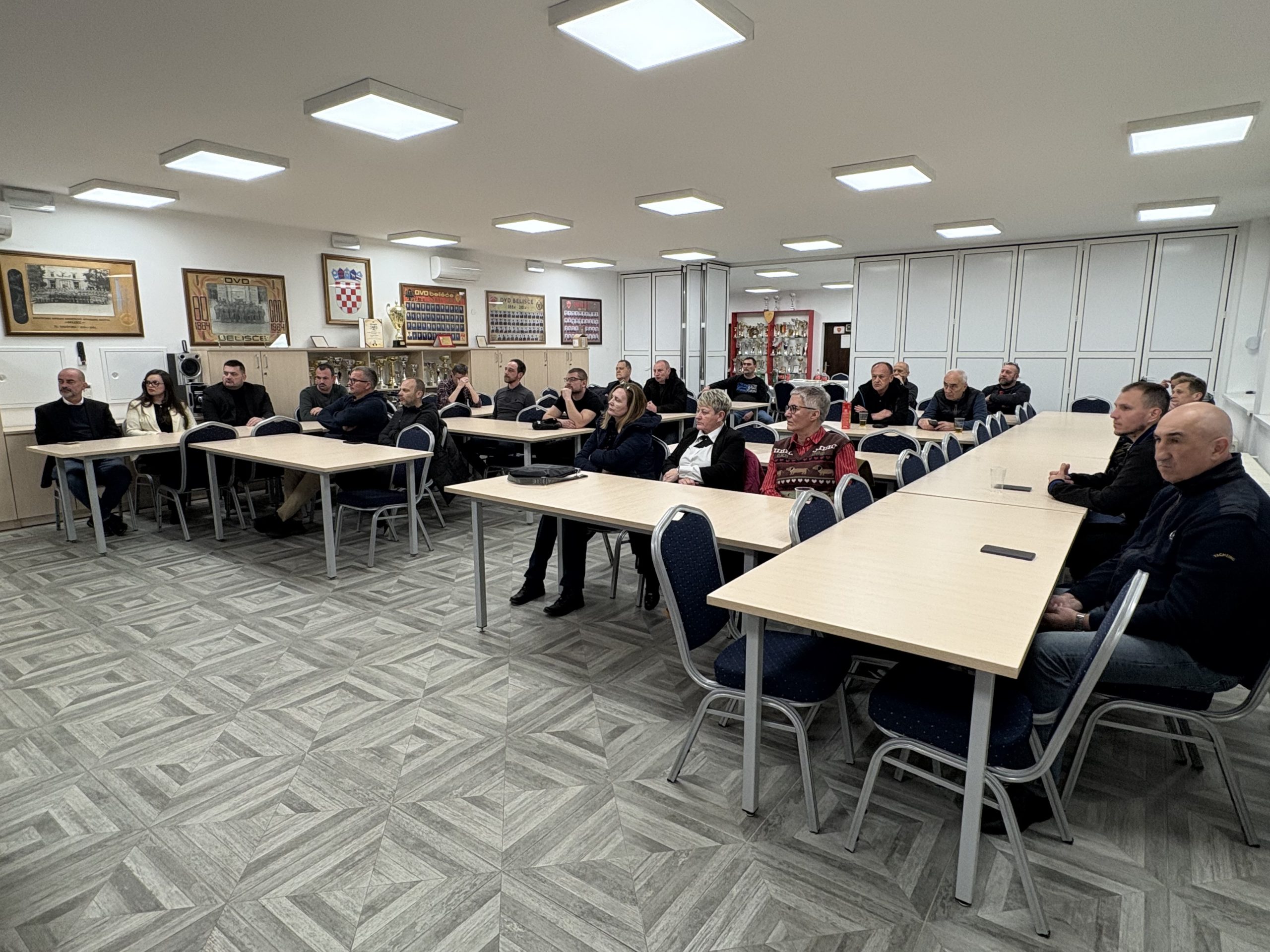
On Friday, March 20, 2026, a conference entitled “For a Belišće of satisfied Workers” was held at the Fire Station in Belišće. The conference was organized by Novi sindikat together with its members workers from three companies in Belišće. The venue for the conference was provided by the City of Belišće, for which we hereby express our gratitude.
The conference was attended by Saša Topčić, union commissioner of Novi sindikat at the metal company Leistritz; Ivica Janković, one of the five union commissioners at the company Harburg-Freudenberger (HF); Dražen Mijatović, union commissioner and president of the works council at DS Smith; Tomislav Kiš, general secretary of Novi sindikat; and Mario Iveković, its president.
Dražen Mijatović was the first to speak about the situation in his company and the general image of Belišće today. He pointed out that Belišće was established as an industrial settlement and reminded the audience that one of the first factories the Guttmann sawmill was opened by a foreign entrepreneur who already realized that a satisfied worker was the best worker, as the development of the plant led to the opening of accompanying facilities for workers and their families. After the Second World War, during the Yugoslav era, the industry continued to expand and the processing sector developed further. At its peak, about 5,000 workers were employed.
During the 1990s, production was impaired, privatization followed, and the number of workers gradually decreased. Mijatović cited union disunity as one of the problems. “We had three unions, and with the arrival of Novi sindikat in 2019, things started to move from a deadlock,” he said. The first collective agreement at DS Smith was signed in 2021. However, a decision made outside the company closed part of the paper production, resulting in about 200 workers losing their jobs, and the fight for severance pay is still ongoing. He also highlighted the departure of young people, who are increasingly leaving Belišće in search of better working conditions, as an additional problem.
Saša Topčić spoke about the fight for the collective agreement at Leistritz. He emphasized that he has been working at the company for 20 years. “Before the collective agreement, salaries were relatively good, but the working conditions were disastrous. We had a union that did not protect the workers, but the employer,” he pointed out. A strike occurred after the employer introduced overlapping shifts, which caused workers to work 19 out of 21 days during certain periods. After the strike and a prolonged struggle, working conditions and wages were significantly improved. “Today we are an example that we can fight for better conditions. People must be united and fight for their rights—if you don’t fight for yourself, no one else will,” he said, stressing the importance of support from Novi sindikat. He added that negotiations for the third collective agreement will soon begin and that they already have higher salaries, Christmas bonuses, Easter bonuses, holiday allowances, and other benefits.
Ivica Janković pointed out that the company Harburg-Freudenberger was founded in 1998 and is today one of the leaders in the production of hydraulic presses. Despite this, workers’ salaries are low, and attempts to raise the issue often face threats. “We are organizing and trying to improve the situation. The situation in Belišće is not good—new layoffs are announced, some workers are retiring, and the quality of work will drop,” he warned. Last year, a branch of Novi sindikat was founded in Belišće with great support from headquarters. “We have had enough of being broken and have started to take action. Despite the pressure, we gathered almost 250 members out of a total of 550 workers and became the majority union. The protocol for collective negotiations was recently signed, and we hope for concrete results soon,” he said, noting that they do not exclude the possibility of a strike.
Tomislav Kiš spoke about the reasons multinational companies come to Croatia, pointing out that their primary motive is profit. “Their principle of action is simple the less I give to the worker, the more remains for me,” he said. He also criticized national policies that support foreign investors, stressing that there is often talk about the number of new jobs, but not about their quality. “No one asks what the salary will be or what the contribution of these companies to the local community will be,” he warned. As a concrete example, he cited Belišće, where salaries in two metal companies are only slightly higher than the minimum wage, even though it is a profitable industry.
He pointed out that DS Smith and Leistritz are multinational companies with factories in multiple countries, while HF also operates on the international market. “At the beginning of collective negotiations, they always try to calm the situation and reduce the demands of the unions. When we asked for higher salaries at Leistritz, they threatened to leave. We told them to go ahead they didn’t leave. Salaries grew, there is more and more work, and the reason is simple: satisfied workers work well,” concluded Kiš, adding that salaries in that company are approaching 2,000 euros today.
Mario Iveković, the president of Novi sindikat, pointed out that the salaries of workers in Belišće increased by 30 percent in the first two years after the strike and that they continue to grow year by year through regular collective bargaining rather than new industrial actions. Today, they amount to around 1,700 euros net, while the salaries of workers in Germany range between 2,500 and 3,000 euros, meaning the difference is narrowing.
He also spoke about the expansion of union struggle methods through cooperation with the international network Clean Clothes Campaign. One of the campaigns will focus on Benetton, which left Croatia, leading to the closure of the Leonarda factory in Daruvar. The first action will take place in London, where an organization from England will gather in front of a Benetton store to demand the payment of severance pay for Leonarda workers.
Additionally, ten years ago, Novi sindikat started promoting the concept of a living wage, to which every worker is entitled according to Article 56 of the Constitution of the Republic of Croatia. Despite this, only a small number of workers receive such a salary today.
In the end, the participants concluded that without a unified union struggle, there would be no significant progress in exercising labor rights. It was pointed out that Novi sindikat will always ask for more for its members because it believes it is possible to achieve this if company owners slightly reduce their profits.
You can read the collective agreement for Leistritz here, for DS Smith here, and you can find other collective agreements of Novi sindikat at the following link: collective agreements.