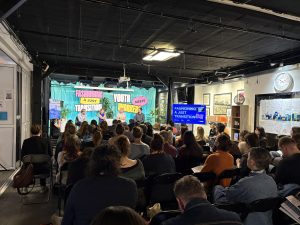
The initiative for the Labor Law today presented its proposals for amendments to the Labor Law as a gift to workers for May Day at a press conference held in the premises of the Trade Union of Croatian Train Transporters. The conference featured speakers Mario Grbešić, president of the Croatian Train Transporters Union, Tomislav Kiš, Secretary General of Novi sindikat, Marina Palčić, president of the Independent Union of Croatian Workers, and Katarina Peović, a member of parliament from the Workers Front who will submit these amendments into parliamentary procedure.
Mario Grbešić stated that his union is seeking changes to provisions that are currently so general that employers can bypass them without fear of punishment, leaving workers to pay the price. He emphasized the need for direct legal protection, including a ban on overtime for workers with accelerated retirement seniority unless they provide written consent. Other demands include restricting worker standby time during mandatory rest periods, allowing redistributed working hours only in seasonal activities, and recognizing the failure to fulfill occupational safety obligations as a fundamental right to strike. He also demanded that the right to strike, as a constitutional category, should not be limited by secondary laws or bylaws.
Marina Palčić warned that the draft of the new Labor Law focuses heavily on the flexibility of working hours, which must not become a tool for exploitation. She requested that flexible hours remain a temporary option available only at the worker’s request to balance professional and private life. Palčić also explained the right to unavailability, noting that European Union directives are clear: workers must have the right to be unreachable by their employers outside of working hours, especially through digital platforms like Viber, WhatsApp, and email.
Tomislav Kiš explained how the current law harms the exercise of the right to strike and advocated for social partners to be regulated as equals. He pointed out that while any union mistake is sanctioned, employers face no penalties for suppressing union activities. He proposed an article stipulating that employers must not hinder an announced strike or replace striking workers with agency staff or workers from the unemployment register. Kiš also criticized the current legal interpretations of lockouts, calling the situation where a worker is considered to be on strike and in a lockout simultaneously illogical and in need of clearer legal definition.
Katarina Peović announced that the Workers Front will submit these amendments after a parliamentary forum where all representative clubs can comment. She added that the changes would ensure that those working on Labor Day or Sundays receive fair overtime pay, as the current law only states that employers must pay more, which can be a negligible amount. The initiative has determined minimum percentages for night work, overtime, and work on Sundays or holidays.
In conclusion, Marina Palčić repeated the core requirements of the initiative, which include shortening the work week to 35 hours, limiting overtime to 180 hours per year without exception, and restricting fixed term contracts to a maximum of one year. The initiative also seeks to prevent the abuse of agency and platform work while tightening penalties for labor rights violations. All proposals are available on the initiative’s website, and all interested parties are invited to join and contribute.
www.zaradnickizor.hr”