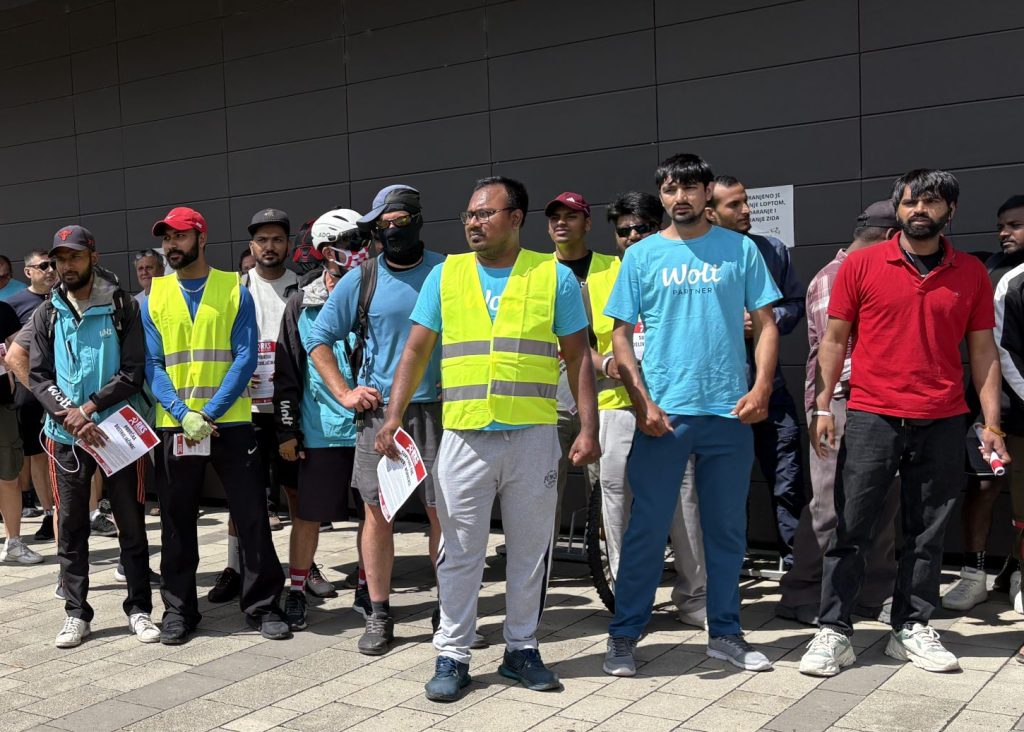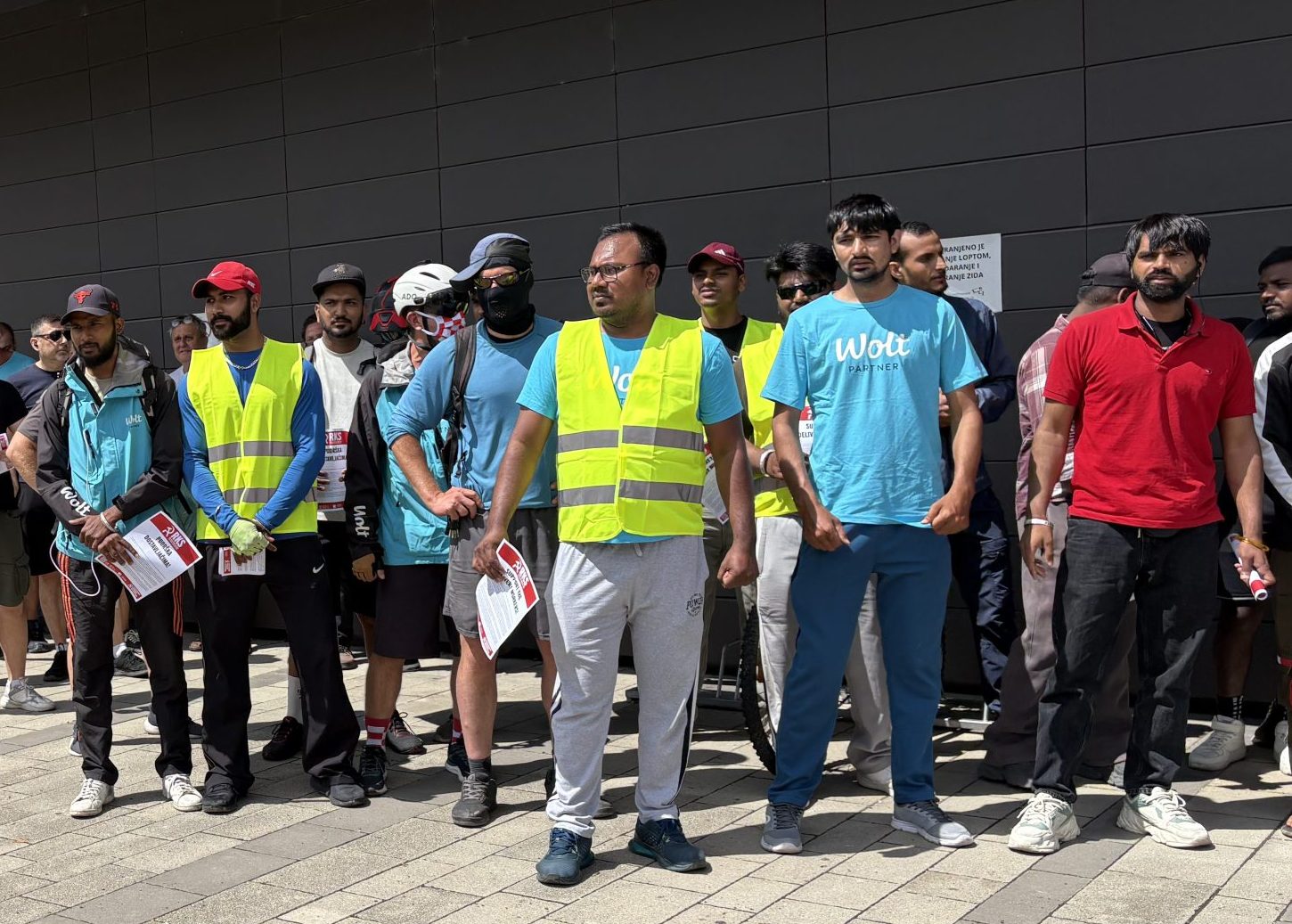
On Thursday, July 17, Wolt delivery workers gathered in front of the Zagreb Fair. Around 11 a.m., they headed toward Wolt’s headquarters in the Vrbani neighborhood. This event marks the first protest in which domestic and foreign workers have joined forces, despite Wolt’s attempts to suppress the action. Specifically, workers reported receiving threats of termination if they joined the strike organized by the couriers ten days ago, and were pressured to leave the WhatsApp groups where the protest was being coordinated.
Furthermore, workers received a notification from Wolt stating they must complete a mandatory hygiene and technical certification by July 30. Since these sessions are only held on Thursdays, the only available date before the deadline coincided exactly with the day of the protest—a move clearly intended to limit attendance.
The primary driver of the protest is the dire economic situation of the delivery workers. Already low delivery fees have fallen even further and remain non-transparent; while a price is listed for each delivery, the calculation behind it remains a mystery, leading to inconsistent earnings.
The exploitation of foreign workers is an especially grave concern. These workers are often overloaded with 12-hour shifts and face existential pressure. While the employer provides the necessary equipment, they deduct costs for room rent, bicycles, mopeds, scooters, and delivery bags directly from the workers’ wages. Consequently, many are left with only 400–500 euros per month to live on. Most of these workers came to Croatia to support their families back home, but they must first repay the debts incurred just to travel here.
Around seventy delivery workers gathered in front of Wolt’s headquarters, chanting through megaphones: “Low pay, no way!”, “Shame on you, Wolt!”, and “Management, go away!”.
Representatives from Novi sindikat attempted to enter the building to meet with Wolt’s management. However, security guards informed them that no administration members were present. Although offered an appointment for the following day, the protesters refused.
As a result, the protesters announced further actions, specifically targeting the Ministry of Labour and the Croatian Government. Their goal is to push for legal amendments that would enable collective bargaining for better working conditions directly with the digital platforms.
Their second demand remains a transparent increase in delivery fees and base start-up rates.