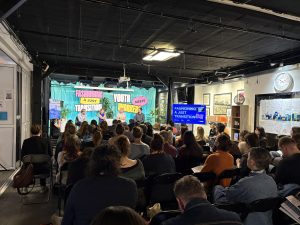
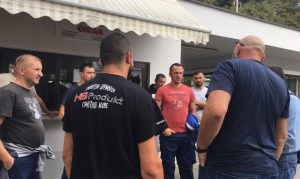
Tomorrow at 10 a.m., we will present the results of research on working conditions in the clothing industry in Croatia and discuss ways to improve those conditions. The survey found that interviewed workers earn only 32 percent of the estimated decent wage and 63 percent of the poverty threshold – with their wages being only slightly above the minimum wage.
What low wages mean for workers and the conditions in which they work; what a decent wage is and how to achieve it; why big fashion companies and brands must be responsible for the conditions under which their products are manufactured; and how to oblige corporations to respect workers’ rights are some of the questions we will attempt to answer.
PROGRAM
10:00 a.m.: Presentation of the results of the research on working conditions in the Croatian textile industry, conducted according to the unique methodology of the global network Clean Clothes Campaign (CCC).
The research was conducted in four companies that produce clothing for famous fashion brands through interviews with 38 female workers. It addresses the difference between the salary that workers receive (most often the minimum wage) and the salary they should receive (a decent wage or living wage), working conditions in the investigated factories, the state of labor and human rights, occupational safety, and the challenges of labor union organizing. We also call on domestic and international brands to take responsibility for human rights due diligence in their production chains.
The results will be presented by: Ana Vragolović, researcher, and Tomislav Kiš, General Secretary of Novi sindikat.
11:00 a.m.: Discussion
At the round table, we will discuss the possibilities of improving working conditions in the textile industry and beyond – what a decent wage is and how to achieve it; why large fashion companies and brands must be held responsible for the conditions in which workers work; and how to oblige corporations to respect workers’ rights. The debate also includes proposing solutions regarding the possibility of adopting a single law at the EU level, which would oblige companies to respect human and labor rights (Mandatory Human Rights Due Diligence Law) and, accordingly, ensure a decent salary.
Experts from the Clean Clothes Campaign, a network of NGOs and trade unions globally committed to improving working conditions and human rights in the clothing industry and advocating for a decent wage, are also participating in the debate. This represents a new standard of joint action between trade unions and civil society associations. The “Clean Clothes Campaign” was started by NGOs in the Netherlands about thirty years ago, and the CCC is increasingly vocal in pointing out brands that utilize “dirty production” – operating in poor conditions that cut costs at the expense of workers, violate human and labor rights, and pollute the environment. CCC public campaigns warn consumers about such unethical practices within global brands. The Novi sindikat participates in the network’s activities.
Participants of the debate:
-
Agnes Jongerius, Member of the European Parliament
-
Tatjana Vlašić, Advisor to the Ombudsman of the Republic of Croatia for the promotion of human rights
-
Bojana Tamindžija, human rights activist from the Center for Emancipation Policies, Serbia
-
Marija Todorovska, human rights activist from La Strada, Macedonia
-
Mario Iveković, President of the Novi sindikat
Moderator: Danica Juričić Spasović, Communications Advisor
Time and Place: June 30, 2020, Tuesday, at 10:00 a.m. Hall of the Union of Croatian Trade Unions (Matica hrvatskih sindikata), Florijana Andrašeca Street 18a, Zagreb.
The round table can also be followed via video stream: YouTube Link
What is a LIVINF WAGE? In contrast to the minimum wage, which serves as a poverty prevention measure, a decent wage does not only cover nutrition and utility payments. It should allow workers, within a standard working week of maximum 48 hours, an income sufficient for healthcare, children’s education, transportation, suitable clothing and footwear, minimal cultural consumption, and some savings. The increasing emigration of the working-age population from Croatia is also a problem caused by insufficient wages that cannot ensure a dignified life. A decent wage is guaranteed by Article 55 of the Constitution: “Every employee has the right to a salary with which he can ensure for himself and his family a free and dignified life.”
What is GLOBAL CORPORATE RESPONSIBILITY? Production in many sectors today has a distinctly international character (e.g., textile, food, electronics, automotive industry); therefore, old methods of regulating labor relations and monitoring respect for workers’ rights can no longer meet the needs of protecting fundamental human and labor rights. Companies and brands in international supply chains must be responsible for respecting the rights of employees in the industries in which they operate, regardless of whether they are direct employers or the buyers of a particular product (e.g., a brand) that indirectly exerts significant influence on wage policy and working conditions.
The Round Table was organized with the support of the Friedrich Ebert Foundation and co-financed by the European Union within the project “Filling the Gap: Achieving Living Wages through Improved Transparency.”
Facebook event: https://www.facebook.com/events/656107765246849/