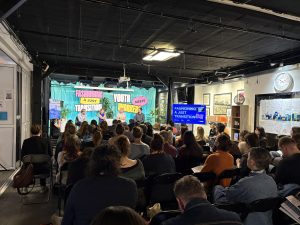
Debts and layoffs of workers in the textile industry, along with exerting pressure on fashion brands, were the main topics of the meeting of the Croatian-Bosnian coalition of the international network Clean Clothes Campaign (CCC), held last weekend (September 1 and 2) in Teslić, Bosnia and Herzegovina.
The organizations Udruženje Zora (Zenica), the Helsinki Citizens’ Assembly Banja Luka (hCA), the Regional Industrial Union (RIS), and Novi sindikat discussed achievements within the “Pay Your Workers” campaign and planned future joint actions.
The CCC campaign “Pay Your Workers” was launched two years ago at the beginning of the coronavirus pandemic, when many fashion brands began canceling orders, using “force majeure” clauses in contracts with the factories producing for them as an excuse. Such clauses allow for payment delays or contract terminations if, as in the case of a pandemic, goods cannot be produced. In this way, fashion companies avoided payments to the factories they ordered goods from, and consequently, textile workers were left without wages and/or severance pay.
There were such examples in our countries as well. For instance, the brand Hugo Boss left Croatia, leaving about 750 workers from two factories (Krateks and Kotka) without jobs. Also, the German brand Olymp canceled its cooperation with Orljava in Požega, which led the factory into bankruptcy. First, about a hundred workers employed on fixed-term contracts were laid off, and then the remaining 172 were also dismissed.
However, the Orljava case case had a positive outcome for the workers, thanks to an 18-month campaign led by Novi sindikat, with great support from the aforementioned organizations of the HR-BiH CCC coalition, followed by support from the German CCC coalition and numerous other organizations from the network. After a series of meetings, press conferences, social media campaigns, and two protests, the Government of the Republic of Croatia decided to pay 491,074 EUR to 237 workers, which included eight severance payments prescribed by the collective agreement and some other benefits that had not been paid earlier. The victory of the Orljava workers is the greatest success of our coalition within the campaign in the last two years.
Furthermore, the HR-BiH coalition conducted a series of other activities. The organization Zora prepared an overview of the situation in textile factories during the pandemic in BiH, while Novi sindikat and the Regional Industrial Union analyzed the situation in Croatia.
In BiH, numerous orders were canceled or postponed, and the delivery of goods was difficult. Problems arose because workers fell ill and went into isolation, so there were not enough workers in production. There were no mass layoffs in 2020, probably because most of the industry shifted to producing protective equipment. Still, there were some layoffs, and the number of workers was reduced.
In Croatia, most factories remained open during the pandemic, although protective measures were insufficient. For example, in some cities, there was no public transport, so several workers traveled together in cars to work—in a situation where physical contact was supposed to be avoided. From the beginning of the pandemic (February 2020) until today, the number of workers in the textile, clothing, and leather industry decreased by about 3,000 and fell to 21,000.
Another important activity was carried out by the association Zora in BiH—training sessions titled “The Alphabet of Trade Unionism,” attended by more than 100 workers from several factories: the Kavat shoe factory (Novi Travnik), the Sportek factory in Kotor Varoš which produces for Adidas, and the Napredak factory from Tešanj whose workers produce for Burberry.
We also participated in many solidarity actions; for example, colleagues from the Helsinki Citizens’ Assembly took part in the March 8th march in Banja Luka titled “We Are Not Cheap Labor” and used the opportunity to send messages for the Pay Your Workers campaign. Orljava workers organized a solidarity action with Adidas workers, as Adidas is one of the fashion brands that left millions of workers without jobs and has not reacted or shown any sign of responsibility so far.
The successes of the Pay Your Workers campaign were significant on a global level as well—the campaign has so far secured more than 10 million dollars in unpaid wages and severance pay for workers in Europe and Asia. Additionally, the right to unionize was won in some factories, while in others, workers who were illegally dismissed were reinstated. In the Indian state of Karnataka, the payment of the difference between the old, lower legal minimum wage and the new, higher minimum wage—which factory owners refused to pay—was successfully won.
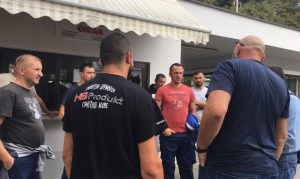
At the meeting, we also discussed how the international Clean Clothes Campaign network can help workers in Croatia and Bosnia in the struggle for better working conditions; on the second day, they were joined by members of the Trade Union of Textile, Leather, and Shoes of Republika Srpska.
In addition to the Pay Your Workers campaign, we presented the “Urgent Appeal” mechanism to the gathered workers. Through this mechanism, the Clean Clothes Campaign can support the struggle of workers on the ground in several ways: by launching global petitions, social media campaigns against the brands for which production is done, street actions and protests, sending and collecting letters of solidarity, exerting pressure on national governments, and organizing events such as press conferences or public forums.
All these are ways in which unions and associations can jointly exert pressure on employers in the fight for better working conditions (which we used in the fight for severance pay for Orljava workers). Therefore, the coalition organizations invited the workers gathered at the meeting to contact them if they encounter any problem at the workplace where the Clean Clothes Campaign could help.
Colleagues from the Helsinki Citizens’ Assembly spoke about another important problem—sexual extortion. HCA launched the campaign “Sexual Extortion is Corruption. Let’s Break the Silence!”, through which they seek to raise awareness among the citizens of BiH about the importance of recognizing and reporting sexual extortion. This is a form of blackmail in which superiors demand sexual favors from female workers in exchange for some basic labor rights, such as vacation days.
The meeting also covered possible changes to legal regulations regarding the introduction of sexual extortion, anti-corruption policies, and gender policies, as well as the introduction of internal protection mechanisms within companies, especially in the textile and footwear sectors.
The president of the Trade Union of Textile, Leather, and Shoes of Republika Srpska, Danko Ružičić, emphasized that the union recognized the importance of incorporating sexual harassment into legal regulations, which is why they advocated for the adoption of the Law on Protection from Harassment at Work of Republika Srpska.
Read more about the activities of each coalition member on their websites and social networks. We continue our cooperation to jointly fight for a better life for workers in Bosnia and Herzegovina and in Croatia.