The question of corporate responsibility in Croatia concerns all of us without exception, as recently highlighted by the Coalition for a living wage. This coalition, made up of several non governmental organizations and trade unions, including Novi sindikat, organized a press conference in Zagreb on March 23 to address this issue. The topic of the press conference was the presentation of the European Citizens Initiative for a living wage and the publication of the European Commission Directive on corporate responsibility. In the text below, we present the statement on the directive that we sent to the media.
Press release: Is there enough talk about corporate responsibility in Croatia?
Do our citizens know what kind of law is being prepared at the level of the European Union? How aware are citizens of their everyday involvement in global value chains?
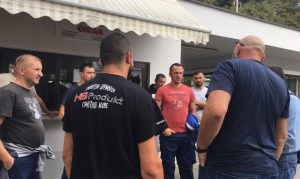
In Croatia, there are factories whose workers suffer from the consequences of corporate injustice, and at the same time, there are brands on our market that commit the same injustices in other countries. Too many companies around the world have profited from exploiting people and the planet. Their activities caused or contributed to climate breakdown, the collapse of biodiversity, the erosion of labor and union rights, forced and child labor, growing poverty, and the killings of activists who advocate for the protection of nature and human rights.
Watch the short animated videos that we have prepared on this topic You Tube, Facebook or Instagram Novi Sindikat.
In April 2020, European Commissioner for Justice Didier Reynders expressed his commitment to proposing new rules on human rights and environmental protection for companies. After many years of insisting on voluntary measures for companies, the Commission finally realized the urgent need for better protection of human rights and the environment.
In October 2020, a public consultation was launched to examine the views of citizens, companies, non governmental organizations and other stakeholders. You can see the results of that research in the summary of the explanation we are attaching.
Some European countries have already adopted national laws to make companies accountable. However, we need a European law. The globalization of corporate value chains has clearly shown that what companies do has a global impact on people and the planet. Companies often externalize and subcontract parts of their production, such as making clothes, harvesting coffee beans or mining minerals, to countries with milder environmental and human rights standards. In these countries, they can act with impunity.
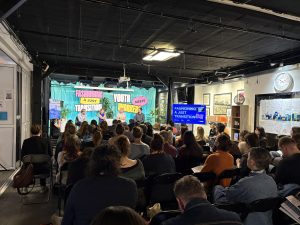
Although we have international guidelines on how businesses should act, such as the United Nations guiding principles on business and human rights and OECD guidelines for multinational companies, they are generally voluntary. These guidelines fail to secure justice for victims, prevent corporate abuse, and change business behavior. The conclusion is as follows: we need binding, not voluntary, rules. On this topic, Novi sindikat organized a workshop for young people in Šibenik.
.png)
“I learned a lot of new things at the workshop. Honestly, it was a shock to me because I hadn’t heard about many of these problems before. I knew how industries destroy the environment and exploit their underpaid workers, but I didn’t know it went to such terrible extremes that these workers must fight so hard to get the justice they deserve.” — Tara, 4th grade of high school.

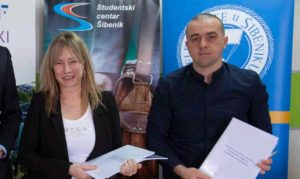
“The topic of the workshop concerns all of us without exception. It encourages systemic thinking, connecting real events and opens eyes to legal rights and duties. It refers to holes through which the rich become even richer, but also tools for individuals to reach their rights. A world where we all have a dignified life should not be a purely utopian idea, right? “said Ivana, a representative of the civil sector.
The proposal of the European Commission to minimize the destructive impact of business on workers, communities, and the environment is a turning point in the fight to end corporate impunity. However, this proposal is riddled with shortcomings and exemptions, as warned by the European Coalition for Corporate Justice.
The draft law would, for the first time, require EU companies with more than 500 employees and a turnover of 150 million euros to prevent violations of human rights and environmental destruction in their supply chains. This would be done by implementing due diligence procedures to monitor and suppress violations of labor rights and environmental damage.
In activities where the risk of exploitation is higher, such as agriculture and the textile industry, only companies with more than 250 employees and a turnover of 40 million euros would be covered, while small and medium sized companies would be exempt. Companies from outside the EU operating in the single market that exceed these thresholds would also be included.
This limitation means that the draft law applies to less than 0.2 percent of companies in the EU. Due to such a limited scope, the proposal ignores many harmful business operations, since the number of employees and annual turnover are not reliable indicators of how a company affects the lives of workers and communities around the world.
This is why the Coalition for a Living Wage announced its participation in the European Citizens Initiative for a living wage. Despite the fact that it is a basic human right defined in the Constitution of the Republic of Croatia, a living wage is not a reality for a large part of workers. Therefore, through this initiative, we will seek the obligation to pay a living wage for all companies in the textiles, clothing, leather, and footwear sectors that produce and market products on the EU market.
IIn May, the collection of signatures for the Directive begins, in which we will also participate. After collecting one million signatures in seven EU countries, the European Citizens Initiative for living wages will ask the European Commission to adopt the proposal. Learn more about the directive In the announcement of Novi Sindikat and in the attached summary of information (1 2 3 4 5). Photos from the workshop are available at the link.
Members of the Coalition for a Living Wage include Novi sindikat, the Regional Industrial Union, the Independent Workers Union of Croatia, the Center for Peace Studies, the Center for Education and Counseling, the Base for Workers Initiative and Democratization, Pariter, House of Human Rights, and Fashion Revolution Croatia.
[2]https://www.novisindikat.hr/sindikalna-novost/za-dostovstvenu-placa