Last week, we attended the Semi-Annual Meeting of the international Clean Clothes Campaign (CCC) network in Vienna. The meeting was hosted by the Austrian CCC branch, Südwind, and organized as part of the ‘Fashioning a Just Transition’ project, in which Novi sindikat is an active partner.
During the meeting, we addressed key issues related to a ‘just transition’—for example, the impact of extreme heat on textile workers and how to tackle this through collective bargaining. We also discussed how to bridge the gap between living wages and sustainable industrial transitions.
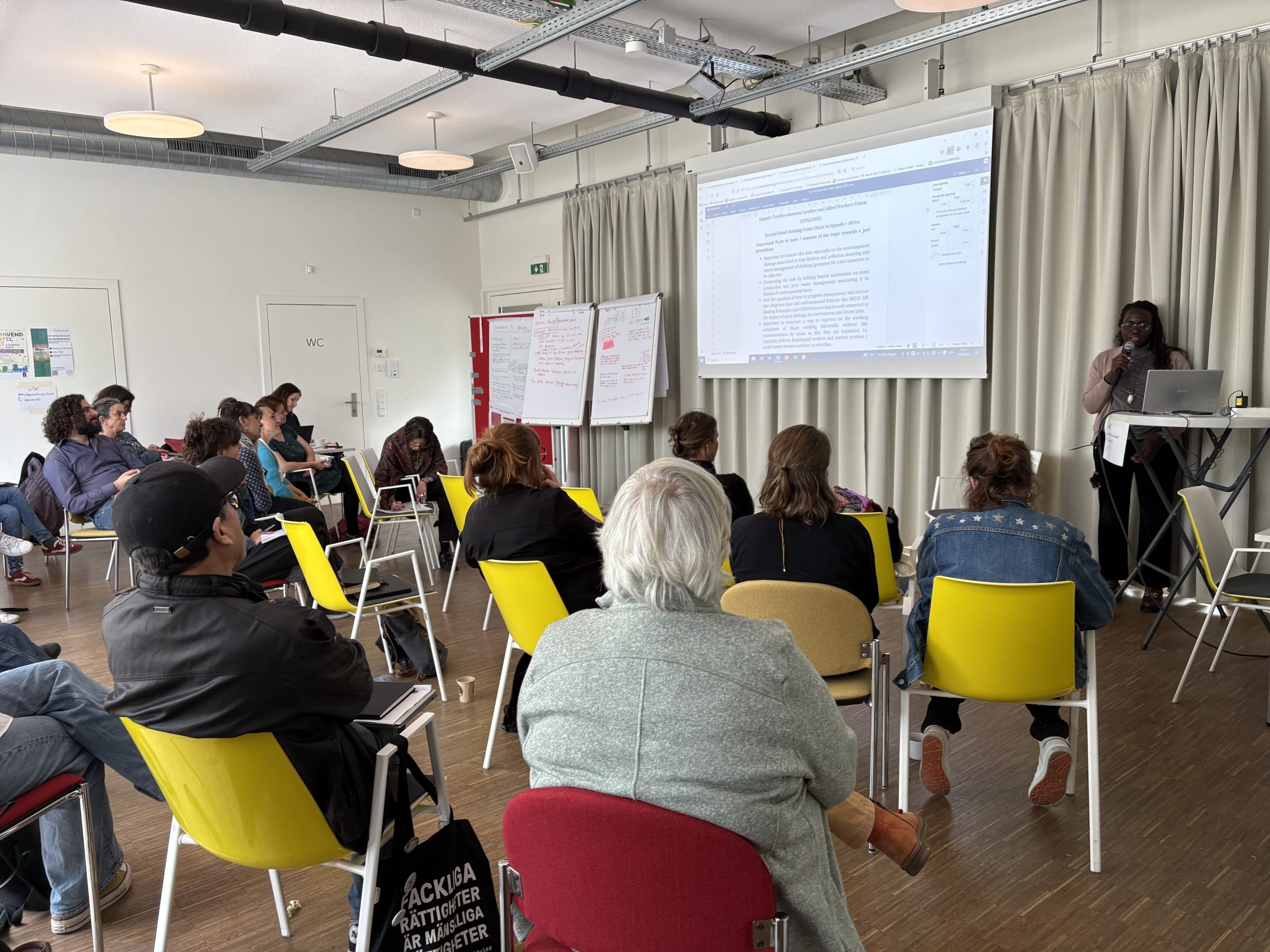
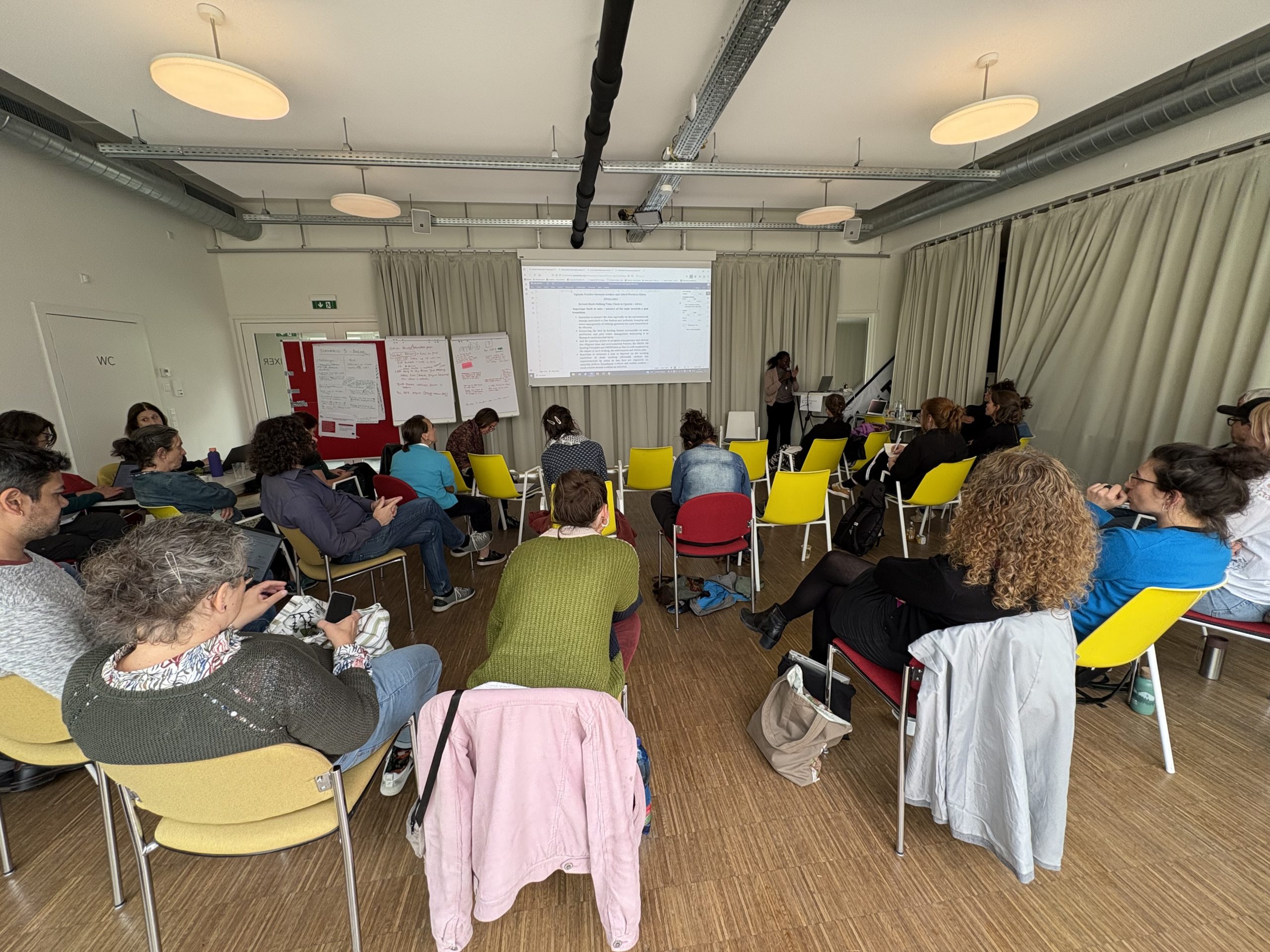
A featured guest was Irene Faith Lanyero from the UTGLAWU trade union in Uganda. Her presentation focused on the second-hand clothing supply chain in Uganda and across Africa. In Uganda, this sector is a vital source of livelihood, employing approximately 700,000 people in roles ranging from logistics and repairs to sorting and retail sales.
Uganda imports approximately 80,000 tons of used clothing annually, primarily from the US, China, and Europe. This clothing is sorted and sold at the Owino Market in Kampala, the country’s largest distribution hub for second-hand goods. From there, the items are distributed to boutiques and markets nationwide.
The clothing is sorted into categories ranging from ‘first class’ (the highest quality) to ‘rags’ and ‘textile waste,’ which have little to no value or are completely unusable. For many low-income families, this is the only affordable way to buy clothes. Furthermore, the sector is viewed positively by locals as it provides employment for women, youth, and unskilled workers who otherwise struggle to find work.
However, the fact that Africa has become a dumping ground for global textile waste poses a massive environmental threat. A significant portion of these goods is unusable and ends up in landfills. This has led to catastrophic accidents, such as the tragic collapses at the Kiteezi landfill.
Furthermore, the root of the problem lies in the staggering overproduction of clothing.
A major point of debate was how to reduce production without destroying the livelihoods of those in Uganda who depend on the second-hand sector. The core challenge remains: how to ensure a just transition that protects the environment without leaving hundreds of thousands of people jobless.
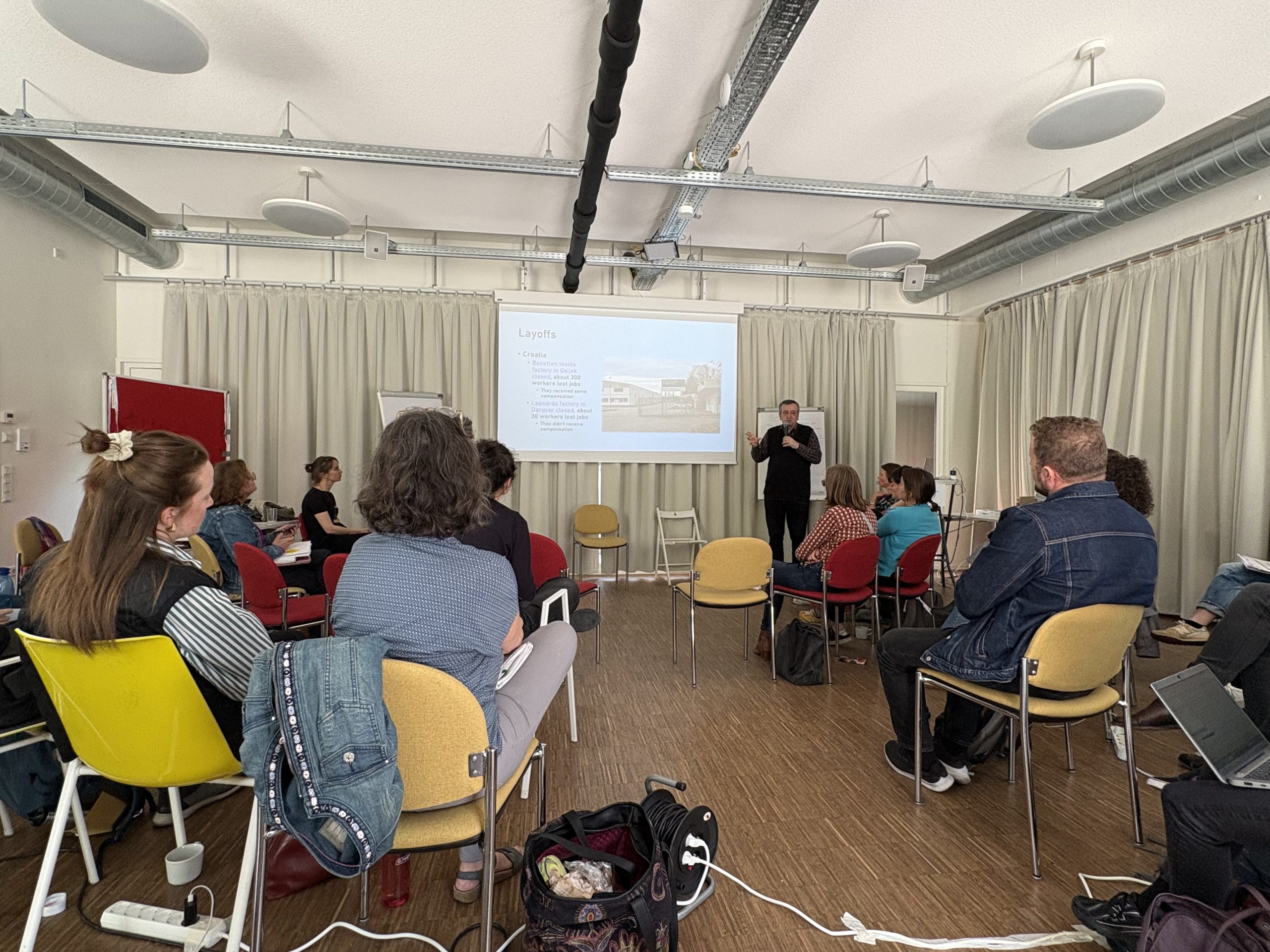
Mario Iveković, President of Novi sindikat, spoke about the crisis within the Benetton Group and its withdrawal from Croatia and other countries. As Benetton’s textile division faced financial turmoil, management decided to close numerous stores and production sites. Current reports indicate a strategic shift to move production from Europe to even lower-cost countries in Asia.
In Croatia, this resulted in the closure of the main factory in Osijek, where 300 workers were laid off. By the end of September 2024, Leonarda, a smaller subcontracted factory in Daruvar, also closed its doors, leaving approximately 30 women without work. These workers have yet to receive the severance pay to which they are legally entitled.
In Serbia, a factory in Niš was closed, resulting in approximately 900 layoffs. Similar to the workers in Osijek, they received only the legal minimum severance pay.
The situation in Tunisia is even more severe, with 24 factories closed and 2,000 workers laid off. These workers have yet to receive any compensation, and negotiations are currently ongoing.
While Benetton provided some form of compensation to those employed in factories it owned directly, workers in subcontracted (co-operative) factories were left in the lurch. Consequently, developing a unified strategy to hold Benetton accountable for its entire supply chain was a primary focus of the meeting.
Alongside these and many other critical issues, the meeting was highly productive and successful.