While in recent years we followed the more and more numerous and faster chasing platform deliverymen and taxi drivers through domestic streets, every new conversation with the workers and each text made it increasingly clear that the Croatian version of the platform “revolution” would prove to be just as problematic and in fact, as rotten as the stories we read in global news. All these stories follow the same dynamic: they begin with broad promises of innovation, freedom, and flexibility for new generations of workers. Then, the situation is slowly complicated by the pressures of a whimsical algorithm, unpredictable and diminishing hourly rates, traffic accidents, insecurity, and an absolute absence of rights. At this point, trade unions enter the scenario, and the plot culminates. This culmination usually revolves around one central issue: conditions for workers are deteriorating, yet platforms have no intention of being held accountable for securing workers’ rights, seeking every possible method to avoid responsibility.
Not only does Croatia have its own version of a scenario that redeems and protects platforms from any responsibility or concern for workers, but it seems we are a “strong contender” in the international race to legally cement this situation. The amended Labor Act (ZOR) contains, as we already know, a section on platform work that will enter into force at the beginning of next year. On this occasion, it is not necessary to search the law up and down to see that it looks as if it were written by the platforms themselves. It is enough to understand the key trick: instead of holding platforms accountable, the law legalizes so-called aggregators as intermediaries effectively turning them into the “legitimate” employers of platform workers.
These infamous aggregators are actually a collection of companies that have functioned for years as alleged “partners” to platforms and as employers for approximately 80% of all platform delivery workers and taxi drivers. It is an open secret if not common knowledge that this intermediary platform market is a massive “hunt in the murky sludge” of illegal labor. A significant number of workers are registered for only a minimum number of hours while actually working ten hours a day, including weekends and holidays. They bear all labor costs themselves; almost none have ever received a day of paid sick leave or annual leave, regardless of what their contracts might state if they even have a contract at all. Aggregators tactically operate below tax thresholds, opening and closing companies at will. They increasingly employ foreign workers who, by all accounts, work in even worse conditions. Meanwhile, platforms care little to nothing about any of this, and inspections are few and far between. The aggregator market the very foundation of the domestic platform economy has been booming for years to the rhythm of Haustor’s “Take the Money and Run.”
Alongside the new Labor Act, the Act on the Suppression of Undeclared Work, which recently entered into force, allegedly aims to bring order to this swamp. However, a situation where aggregators are legalized and platforms are stripped of any real responsibility while they simultaneously dictate fees and coordinate work via algorithms will weigh heavily on the backs of the workers.
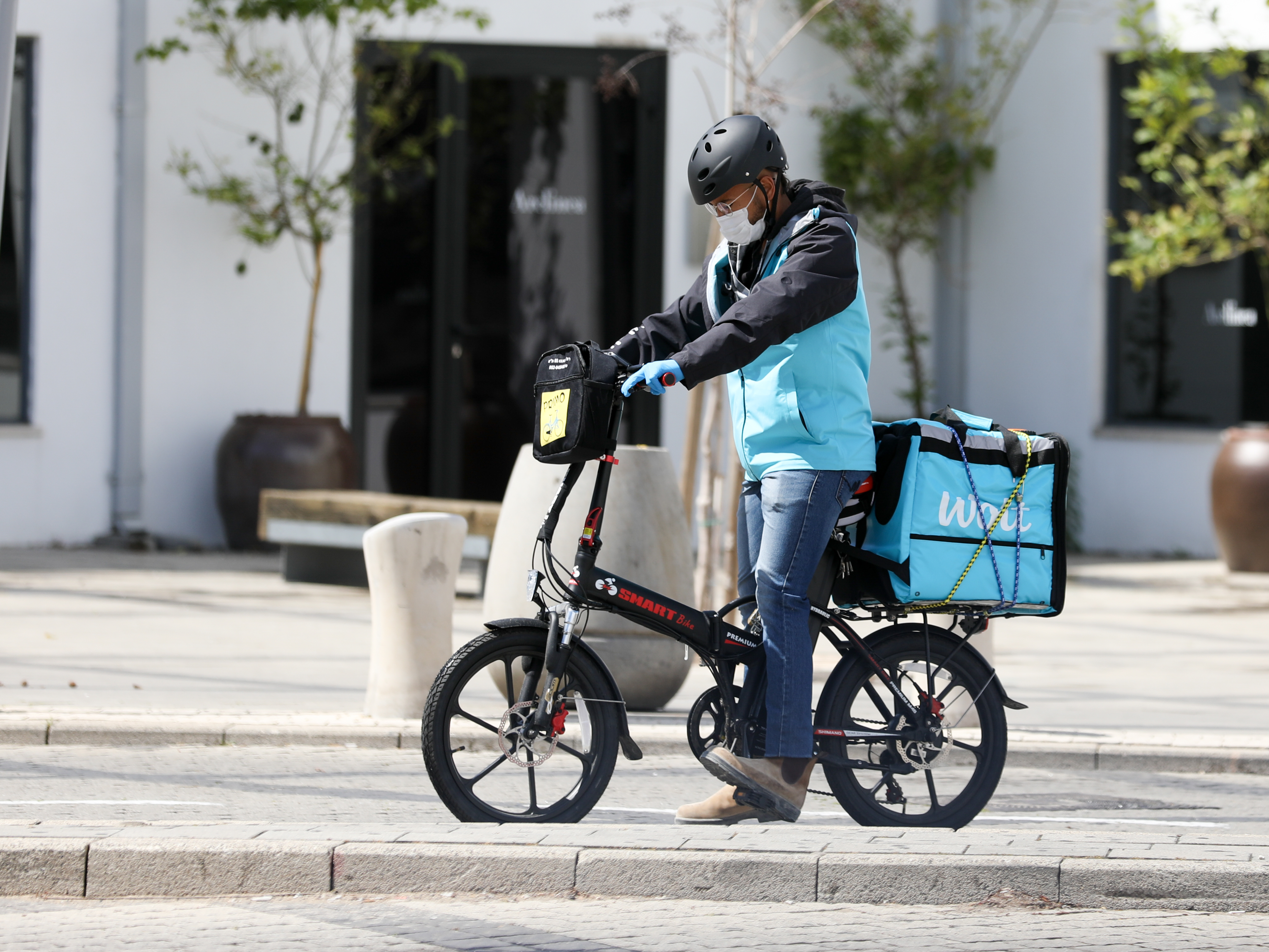
It was not the first time that the Wolt workers took to the streets. After the first protest on February 14, the administration as stated by Katarina Peović from the Initiative for Radnički ZOR, which supported the delivery workers—deceived the workers by promising negotiations, of which there was ultimately nothing. Given that Wolt continues to dismiss their demands, they are also preparing a third protest on March 10. The basic demands of the rebel Wolt workers, who do not want to give up and agree to an underpaid everyday life in which they rush through the streets with their lives at risk every day, are the following: at least a thirty percent increase in the delivery fee, allowing them to work through their own trades instead of through intermediaries, changes to the two aforementioned laws, and supervision of the conditions in which foreign workers work.
Wolt’s administration rejected them all because fulfilling them would, as the General Manager of Wolt, Marin Šušnjar, says, “endanger the business of the company.” Regardless of the fact that the application dictates the price and manages deliveries, Šušnjar claims that Wolt is not responsible for the amount of delivery salaries, nor for contributions, nor for working conditions and workers’ rights, nor for the conditions in which foreign workers are mass-imported. According to them, it is all a matter that delivery workers arrange with the aggregator.
Wolt can now confidently repeat this mantra because it is written in the new law the Joker card, which finally fell into the hands of platforms. With this law, as Peović emphasized in the press conference the day before the protest, “digital platforms are fully amnestied from responsibility.” Just as they wanted. For those who have been following their business for a long time, all this probably feels like the 2017/2018 season, when the new Road Transport Act, with the intention of supposedly legalizing Uber, in fact created a new taxi market exactly according to its measure completely deregulating the price of driving and the number of taxi licenses while making them easier to obtain.
The illogical situations that arise on the ground in the triangle of Platform – Aggregator – Worker were described by Domagoj Martinić from the Wolt Delivery Association Initiative: “Some colleagues received notifications via the application that the platform no longer works with them. It functions, although it is not formally called so, as a dismissal. This raises the question: how can you get fired through the application if the application is not your employer? In that situation, it should have been the aggregator’s duty as our employer to find us another job, but this does not happen. A lot of people in such situations did not receive any dismissal papers from the aggregator, with which they might have been able to exercise some rights. There are a lot of irregularities. It is a huge gray zone.”
From a union perspective, Mario Iveković from Novi sindikat and the Initiative for Radnički ZOR spoke about these practices at the press conference, underlining that the behavior of aggregators does not resemble that of an employer at all: “Currently, the situation is such that if a person falls during a delivery, instead of receiving recognized compensation for a work-related injury and 100 percent sick leave, the platform deletes them from the application because they are no longer efficient, and the aggregator deregisters them from the HZZO without a written layoff. In such cases, we sue the aggregators for illegal dismissal. If they are employers, they have obligations to the workers that they must fulfill. And if they are not, let them move out of the way. They are only intermediaries who skim the cream and have no function except to release Wolt from responsibility.”
Because of all this, the Initiative for Radnički ZOR, as announced by Peović, will demand that aggregators be removed from the equation. There is enough time to do this, she claims, until the part of the Labor Act (ZOR) concerning platforms comes into force next year.
The Wolt Delivery Community Initiative also wants aggregators removed. Martinić explains their proposals: “Two models are possible. One model is classic direct employment for a fixed hourly rate, whereby platforms cover all costs currently borne by delivery workers. If everything were in order, we would have no problem working forty hours a week, but in that case, the pay should not be the minimum wage under any circumstances because this is a high-risk job performed on Fridays, holidays, and in all weather conditions. In fact, the worse the weather, the more we are in demand.” Another model they propose, continues Martinić, is to enable delivery workers to work through their own trades (obrt) on a commission basis, but then the earnings would have to be higher because they would bear the costs of the vehicle and everything else themselves. In addition, he points out that fees must grow. They were all affected by the conversion to the euro and “rounding down,” as well as inflation and rising fuel prices. “You work more for less,” he notes. Martinić claims that the reports of average earnings of 1,100 euros with Wolt intended to show that delivery workers make solid money are a lie. Once you deduct commissions and contributions from that amount, and before even counting fuel and depreciation, the actual earnings are much lower.
If this continues, the delivery workers estimate that only the cheapest labor force which aggregators import en masse and which agrees to even worse working conditions than domestic workers will remain. Although they require monitoring the conditions of foreign workers, Martinić clarifies that the initiative has nothing against them: “They are modern slaves who work ‘All Day, Every Day,’ as they say. One boy fell off his motorcycle, was fired the same day, and was kicked out of his accommodation. They work 75 to 80 hours a week, which should result in a profit of over 3,200 euros per month, yet they receive, for example, only 700 euros. The rest is taken from them for scooter rentals and accommodation in apartments where perhaps fourteen people live together. They are scared and do not know their rights.” This is why his colleague from the initiative, Silvio Šimić, noted at the press conference that they are also inviting colleagues from other countries to join them.
Wolt tries to discourage the association of delivery workers in a number of ways, though none are particularly creative. At a meeting, as Peović recounted in Parliament, they waved a paper with the names and PINs (OIB) of 24 delivery workers from the initiative, which is pure pressure on them and on workers’ organization. In addition, they claim that these actions will threaten the platform’s reputation, causing users to turn to competitors and threatening the future of all Wolt’s delivery “partners.” Martinić is not worried about a decline in demand: “In recent years, delivery has become like Netflix an additional cost that is completely normal for us, just like utilities and rent.”
However, there is more on the day of the protest, as Peović reported on social media, Wolt tried to demotivate workers from protesting by offering a higher delivery tariff during the two hour protest. They denied the motive, claiming the increase was due to rain. This anti-union maneuver is transparently ridiculous and, as noted, quite stingy. If a company intended to engage in “union busting,” one would expect a better offer perhaps a higher tariff all day or at least a discount on burgers. Platforms have tried this before; for example, when Uber
broke the union in Seattle in 2017, they offered free fried chicken wings.
Joking aside and without giving Wolt any more ideas regarding global union-busting trends it is better to end with an invitation to the next protest planned for this Friday at Ban Jelačić Square. Martinić and the initiative conclude: “The behavior of platforms resembles the worst form of American capitalism: as much profit as possible with as little cost as possible. If it continues in this direction, it will affect other jobs. We invite workers of all digital platforms, and all people of good will, to help us because we are not only fighting for ourselves, but for the introduction of regulation in this market.”
The text was originally published On the Workers’ Rights portal 7.3.2023.