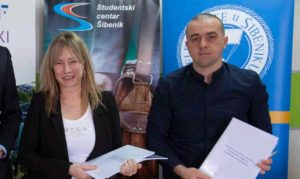
Tomislav Kiš, General Secretary of the Novi sindikat, discusses the most critical demands that unions should make: amending labor legislation due to increasingly frequent strike bans and shifting toward the living wage concept.
The new government should attempt to cure the greatest ailment of Croatian society: the judiciary. The laws currently in place are poor and are not yet strictly applied according to statutory principles. Too many judgments, especially in the field of labor, are subject to political influence and “phone call” interventions. Specific laws applied to the labor market—the Labor Act, the Occupational Safety and Health Act, and the Act on the Representativeness of Trade Unions—are biased in favor of capital (i.e., the employer). Furthermore, the Act on Representativeness is extremely favorable to established, inherited unions, effectively stifling new initiatives and struggles.
The total uncertainty regarding rulings in the area of industrial conflicts (strikes) completely suppresses militant unionism. Today, it is impossible to answer with 100% certainty the question: “What must I do to ensure my strike is legal?”
Amending labor legislation that is currently contra operatorem (biased against the worker) is the number one priority.
We must also completely change the way of thinking, perception, and calculation regarding what is currently called the “minimum wage.” Answering the question of what constitutes a sufficient minimum wage is almost impossible. Instead, I advocate for adopting the living wage standard, the foundation of which is enshrined in Article 55 of the Croatian Constitution. Under this principle, the basic minimum would exceed mere survival and enable a person to gain more than just subsistence from their work and salary.
Guaranteeing legal and economic security is also extremely important for the sectors in which we organize workers. I see specific challenges in companies dealing with textile processing, wood, and food production. Greater state support (not necessarily financial, but political) is necessary—using political means to stop the neocolonialism manifested in the textile industry, which is characterized by the raw sale of labor power deprived of all creative value and sold at imposed prices. Similarly, in wood production, we export raw materials and import finished products; this is a textbook example of colonial enslavement. In food production, by excessively importing cheap food of questionable quality, we destroy our own production. A nation with agricultural resources like the Republic of Croatia that is unable to feed itself is a nation that needs to reconsider its purpose.
If the new government is composed of individuals from the well-known political establishment (which it will be), I propose that they dismiss themselves on the first day of their mandate, so they do not trouble us until the next elections. For the new elections, I propose a lottery system, where the Prime Minister and ministers would be drawn like lottery balls from the list of adult citizens of the Republic of Croatia.
The article was originally published on the portal Radnička prava on July 1, 2020, under the title: “Tomislav Kiš: We must not settle for wages sufficient for mere survival.“